
July 1977: Community and Traditions

7-1-77 trailer
I asked Mike if he’d seen Frank. Frank went to Wyoming with a committee and he’s been there for the last few days. He’s meeting with the Arapaho. He went with a delegation to talk to an Arapaho medicine man about moving the Gros Ventre sacred pipes. It was discussed at the last treaty committee meeting. Mike said that Frank has still not had the time to go to North Dakota to sell his books.
7-2-77 Ray and Irma’s
Susie and I went over to visit Ray and Irma. Cyndee was showing us beadwork. Ray said that this was one of the changes from traditional times. Men never used to do beadwork. Now they do beading, like chokers, necklaces and keychains. “Only women did beadwork traditionally. Men would make roaches, but they never would have done beading.” Some of the beadwork they showed us had antler sections from a deer; it was used like an abalone shell. Irma had a necktie she said was made in Deer Lodge Prison. “I liked the design and colors, so I bought it. It was made on a loom.” Irma told Susie that she needed another beaded lighter case – Susie beaded one for her for Irma’s birthday. Irma gave hers to Marilyn because she kept admiring it. Susie said she would make her another one.
7-4-77 mission
On every Sunday night at 8:30 there is a radio program about the Rocky Boy Reservation on KPQX (92FM) from Havre. The program is called Chippewa Cree News and one of the reservation locals talks about news from the reservation. A similar program is on Tuesday afternoon at 1:30 and lasts for a half hour. This program is on KOJM (6.10AM) from Havre. The program is about the Ft. Belknap Reservation and is called “Native American Voice.” John Quincy announces the news and public service announcements. He is a graduate from St. Paul’s Mission School. Karen Stiffarm also does some announcing. The show is produced by the Highline Indian Alliance in Havre.
7-5-77 Hays
Mike drove Sonny up to the hospital in Great Falls today. First he took him to the Agency, and he was given a preliminary examination by a doctor from the PHS hospital. Mike was told that it was a requirement to be examined by a personal physician in your own area, before he can be referred to another doctor and hospital, in Sonny’s case to Great Falls. When they drove to Great Falls, Mike took all of Sonny’s medical records with them to give to the doctors there. Mike said that Sonny took the whole thing pretty well. If it wasn’t for Mike, Sonny would not have gone. He had never been to the hospital for treatment so they don’t know if Sonny can be helped. About three years ago, he had an appointment at the hospital but at the last minute he decided not to go. He is going to see a neurologist, and he will be there for about two or three days. Sonny has MS. Mike said that the PHS paid him $28 to make the trip. He said that it cost him a lot more but that he wasn’t doing this for the money.
7-7-77 Camie and Richard’s
Susie went to Camie’s at 10:15 for Darian’s piano lesson this morning. She has an hour lesson from 10:30 to 11:30 every Thursday morning. Afterward, Camie enjoys visiting with Susie.
My birthday was coming up. Darian left the room and gave Susie a present to give to me. It is a picture of the crucifixion of Christ matted on green construction paper. She wrote, Happy birthday, Sandy, from Darian.
Thank you, Darian!
7-7-77 Gordon and Edith’s
Edith was in one of her dresser drawers looking for something. She pulled out a package. It was a small blue outfit; it was lacy and very pretty. She said that this was the outfit that baby was baptized in. She showed me a picture of Dion when he was a baby. She said that he was sure a fat baby. She went a little further down in the drawer and smiled as she pulled out a plastic bag. She took out a pair of high-topped moccasins. They were beautifully made and had a floral design in green, yellow and pink. She said that these were Venetia’s for her dancing outfit when she was younger. She sure wore these a lot. That’s why they’re not clean. She can’t wear them anymore because they’re too small for her. But I’m keeping them because the woman who made them is dead now, Cecilia Lamebull, Beatrice’s mother.
7-7-77 Hays
A lot of people have put in gardens around their homes. Most people have said that there are more gardens in Hays than there have been in a long time. The people who I have seen with gardens are Camie and Richard, Bruce and Ida, Lindey and Irene, Mary and BJ, Beatrice and Jim, Nucky and Bazoo, Hazel and Chinky, Clifford and Socksy and there are many others. Bill even built a greenhouse connected to Jim and Beatrice’s house.
7-7-77 Hays
The milk and milk products at the trading post are delivered by the Vita Rich Dairy Company out of Harlem. After he delivers the store’s supply, he comes up to the mission and makes two deliveries, one to the convent and one to the rectory. During the school year, he also delivers the pints of white milk cartons for the school breakfast and lunch programs. He comes on Mondays and Thursdays. The food at the trading post is brought down by truck from Harlem and Havre.
Allen sells both gasoline and fuel oil at the trading post. He has two pumps in front of the store. You fill up and then go in and tell him how much you owe him. Most people avoid going there because his prices are high, 60 cents to 70 cents a gallon. There are gas pumps at the DY Junction for gas. Lodge Pole has a gas station at their store, but the prices are also high. There is a Conoco Station on the reservation just west of the Agency. And there are a lot of gas stations in Harlem, Conoco, Cennex, Texaco. When Allen is out of gas, though, it is a good sign that the kids will be out in more than normal numbers siphoning gas.
There are two sources of fuel oil (propane) for the people in Hays. You buy it from Bruce who owns a truck in Hays, or you buy it from Conoco in Harlem and he delivers it. Everyone complains about both of them. The mission buys its fuel oil from Bruce, and the mission has its own gas supply. Gas is ordered from Conoco at 50 cents a gallon every two weeks to a month.
7-7-77 Hays Trading Post
The Hays Trading Post also functions as the post office for Hays. There is a separate room in the store that is used for the post office. Alice Fluery works as the postal worker for Hays. She sells stamps, cashes checks and takes care of the mail. The mail is brought down from Harlem at noon. He drops the mail off with Alice and she sorts it and she gives the postman the outgoing mail to take up to Harlem. At noon, she sorts the mail and puts it into people’s boxes. Each family or household has a mailbox, and they pay dues (about $3 a year) to have this box. It’s an old combination box. At 2:15 people start crowding into the store to pick up their mail. The front of the store is a mass of cars, pickups, horses, dogs, kids and adults from 12:15 until 1:30. People pick up their mail, read the latest notices posted on the bulletin board, and gossip with whoever is around the store. If anyone received a large package or box that won’t fit in the boxes, they have to pick these up over the counter. Alice lets you know if you received anything.
Alice opens the post office in the morning and closes for an hour or so at around 1:30 (depending on when the mail comes, how long it takes to be sorted, how hungry Alice is, what she’s having for lunch). If you received a package, you have to wait for her to return to pick it up. She closes the post office between 3:30 and 4:00. On Saturdays, Alice sorts the mail at noon and then closes the post office for the day. No large packages can be picked up on Saturdays; only what will fit into the boxes.
The mission and the school district, including Urban Rural, receive the most mail. Carol Doney picks up the school’s mail, but the mission has a special relationship with the post office. The mission used to be the Hays post office, but they gave up this function some years ago. For whatever reasons, the mission does get some fringe benefits. At noon, after the postman delivers the mail to the store, he swings by the mission and picks up the mission’s mail from a mailbox and then takes the mail bags to Alice. Instead of getting our mail from boxes, she hands us our mail over the counter in these mail bags. The convent’s and the rectory’s (and volunteer’s) mail is separated.
CODs are paid to the Trading Post and Allen pays the money out to whomever it goes to. Lodge Pole has the same mail system. Beaver Creek’s mail is delivered to a group of boxes on Route 191. The Agency’s mail is delivered to their post office in Harlem and those people who live in the northeastern part of the reservation pick up their mail in Dodson.
7-7-77 trailer
Barbara came up to the trailer at 12:30. She told Susie that Tuffy finished the hide that he made for her. She said that she would bring it up to the trailer at 5:00 this evening. She came over at 6:30. She said that she was out at the plunge with her kids and they ran out of gas. We were sitting out there for two hours before help came out. She handed me the hide and said that it was a large one so she was charging me $25 for it. Susie paid her. Barbara told Susie that Tuffy would be stretching hides on Sunday, and she invited Susie down to watch. Susie told her that she would be there. Susie wanted the tanned hide to use for her beading, but we decided to save it and she’s going to buy scraps from a saddle maker and belt maker in Harlem. These tanned hides (almost always deer) are used to make women’s dresses, ornamented with bead work designs. Moccasins are also made from these hides, both low and high topped, and they use the hides as backing for certain beaded materials, medallions, braid ties, belt buckles and hair barrettes.
7-7-77 trailer
Gordon said that their record will be coming out in a few months, around October. It will be made into a record, cassette and eight track tape. They made it on June 30, 1977. It was only the four of them (Caroline and Bobby). At first the guy didn’t want to do it with only these four, but after he heard the tapes, he told them to sing a song. Gordon said that they sang a really slow one. Then he said, sing me a nice fast one, so we did, and he said, go ahead. Gordon said he wanted a fancier cover for the album than they got. The man just took their pictures to be on the album cover. Gordon said he wanted something Gros Ventre, a man sitting on a horse with the mountains in the background his hair in braids and a breast piece.
Edith wants me to give her piano lessons. She would like to be able to play the organ in church. She said, that’s what’s been missing from the church, there’s no music. Gordon said that it would take her years to learn. Edith said she didn’t want to play like a professional, just like Susie.
7-8-77 Hays
I took some of my slides up to Owl Drug in Havre to have prints made for some people in Hays. Gordon and Edith of Dion. Camie from the feed and giveaway. Ray and Irma from Ray at the drum at a pow wow. Frosty and Tiny’s wedding. Some people from arts and crafts. Beatrice and Jim on Beatrice’s birthday. And Mary and BJ’s kids on my lap as Santa Claus at the mission school.
7-8-77 mission
Susie and I went into the Trading Post at 1:30 to pick up the mail. There was a notice posted on the bulletin board listing 31 people who petitioned the tribe for enrollment (either Assiniboine or Gros Ventre). The 31 newly enrolled members are all young children whose parents petitioned for their enrollment. On June 21, 1977, a committee of the tribal council accepted the children. The parents must prove their degree blood of the children and must be at least one quarter degree Gros Ventre or Assiniboine for them to be enrolled on the Ft. Belknap Reservation.
7-8-77 Trading Post
There was a new notice on the bulletin board. It announced a meeting concerning recreation in Hays. It will be held on July 12 at the Senior Citizens Center at 7:30. It said all people of all ages are welcome to discuss setting up and planning recreation in Hays. Joanne was working behind the counter at the store, and we asked her about the meeting. She said that Doug Morin is organizing the meetings – he’s a tribal policeman. He would like to have the meetings every Tuesday. It’s not any formal group, like Gerald’s tribal recreation department. It’s just a committee that would be formed from the Hays community, kids and adults, to plan and organize some recreation for Hays.
7-9-77 Ray and Irma’s
Ray said that he made four hours of tapes about two weeks ago and he offered for me to listen to them. He gave them to me to use, and he told me that they might be able to help with my research. They’re about the Gros Ventre sacred pipes, the Gros Ventre leaders and the different Gros Ventre societies. Ray said that he was looking forward to our interview sessions. I have a lot that we can talk about, but let’s wait until August, sometime before school starts. I can only tell you what I know from my own life experiences and about my own life.
But I’ll tell you what The Boy told Dr. Cooper. After The Boy told Dr. Cooper a story, Dr. Cooper asked him if that was the whole thing. The Boy said, what I told you was only the trunk of the tree. The tree has limbs and there are branches on all the limbs and more branches and more branches. All I told you was the trunk. But The Boy told Dr. Cooper a lot. There’s a lot in the book and it’s all typed in small print. There’s a lot there.
7-9-77 Ray and Irma’s
Ray said that the Gros Ventre were a nomadic tribe. “They traveled all over. I don’t know how far east or west they went, but when they split off from their sister tribe, the Arapaho, they were in Oklahoma. And they went as far as the Saskatchewan River to the north.”
Raymond said that he heard that the Gros Ventre had some kind of pottery made from clay. Ray said that he heard the same thing.
Ray said that the Gros Ventre used to be divided into the clans, but the last of the clans were about the 1860s.
That’s when they died out. There aren’t that many families left from the clans. There aren’t that many families that descended from these clans. They had these clans for survival. Before the smallpox epidemics decimated the population, there used to be 10,000 Gros Ventre. This would have been too large a society to be together all the time. So, they had these clans, and they would split up most of the time during the year. They couldn’t feed that many people if they were together all the time. They couldn’t find enough food to feed 10,000 people all year. So, they split up into clans for survival.
The Gros Ventre had twelve clans, and the 10,000 Gros Ventre were divided up into these twelve clans. After the smallpox epidemics and after the Gros Ventre population dwindled, they didn’t need these clans anymore. (Also, after the buffalo were killed off in the 1870s and the subsistence base changed, they were no longer dependent on hunting, and they didn’t have to worry about the carrying capacity of the land – consistent with Ray’s explanation).
So, the clans disappeared. The Gones all belonged to the Frozen Clan, and the Lamebulls and Mains all belonged to the Upper Quarter Clan. There aren’t that many Gros Ventre left though that descended from these clans.
The clans came together three times a year for pipe ceremonies. Not all the clans were with the Flat and Feathered Pipes during the year, but they came together three times a year for the pipe ceremonies – in the spring, summer and fall. They didn’t have to come for the pipe ceremonies in the spring and fall, but all of them had to be together for it in the summer.
7-9-77 Ray and Irma’s
Ray said that traditionally, the Gros Ventre were not sociable people.
They were loners. They stayed to themselves. If they saw another tribe, they didn’t go out of their way to go to them. They would go the other way to avoid them. At first, whites thought that the Gros Ventre were part of the Blackfeet Nation, but they weren’t. They were never a part of the Blackfeet Nation. They were just allies with the Blackfeet and that’s all. The whites made the mistake of treating the Gros Ventre as a part of the Blackfeet Nation. They weren’t, they were loners.
Raymond said that the Gros Ventre were fierce warriors.
They took this area away from the Snake Indians and they also chased the Sioux. They were also a very elegant people. They dressed very elegantly and they were very clean. When the French traders came to this area, they saw the Gros Ventre. They were already with the Chippewa Cree, but when they saw how elegant the Gros Ventre were, they wanted to start trading relationships with the Gros Ventre. They thought it would be a good idea. But when they asked the Gros Ventre, the tribe didn’t want to have anything to do with them.
Irma looked at Marilyn and said, “The Chippewa were a good tribe, too.” Everyone laughed and Ray said, see we even have tribal conflicts in the house.
Ray said that the Gros Ventre were a clean people.
They learned a technique of rubbing their buck skin with white clay and that’s why their buckskin was always white and clean. That’s why they called themselves “the white clay people.” Other tribes called them different names, and the French called them Gros Ventre.
7-9-77 Ray and Irma’s
Ray said that the Chief Joseph Memorial pow wow this year at the Agency in October is going to be really big.
The Chief Joseph Pow Wow was in Idaho June 17 on their reservation where the Nez Perce live. It was a big pow wow because it was the 100-year marking of the Chief Joseph march. It was the centennial of his beginning the march to try to get to Canada. Gerald went and he told me about it. They gave away a lot. They also paid for people’s rooms for the weekend if you wanted to stay in a hotel. And they had tipis for people who wanted to stay in a tipi. They also provided all the meals for the weekend. It was 100 years since he was caught in the Bear Paw Mountains. The Nez Perce had $1500 left over from this pow wow and they are planning to send a delegation to the Chief Joseph Memorial Pow Wow at the Ft. Belknap Agency.
7-9-77 Ray and Irma’s
Ray said that most of the government programs through the BIA and the Department of the Interior have been directed at acculturation.
The Gros Ventre are the most acculturated tribe in the United States and there’s two reasons why they were so well acculturated. My parents and grandparents and their generation could have gone either way. They were straddling the fence and could have gone toward the Indian way or the white man’s way. They figured that they would be forced into the dominant society eventually. They would have to accept the white man’s way sometime in the near future. They decided that it would be easier on their children if they just gave up their ways and not put their children through the same problems and decisions that they were going through. They didn’t want their children to go through difficult times. So, they didn’t pass on the Gros Ventre ways to their children. They just let their children learn the white man’s ways in the schools and everywhere. They didn’t teach their children the Gros Ventre tradition. They wanted to make it easier on them, and they knew it was going to be this way eventually.
The second reason for why the Gros Ventre are so acculturated is that the Gros Ventre language was so difficult. It couldn’t be written or read. It was easier for the children to learn English than it was for them to learn Gros Ventre. So, the parents taught their children English in the home and that’s why so few people know Gros Ventre. We’ve lost the Gros Ventre language.
The other tribes are just as aware of these changes as the Gros Ventre. They also knew that they would eventually have to accept the white man’s ways. But it was too hard for them to give up their culture, and they hung onto their culture. That’s why tribes like the Assiniboine have so much more of their culture than we do. They hung onto their culture even though they knew they would eventually be forced into the dominant society. It was hard for the Gros Ventre to give up their culture, too, but that’s what they decided to do. They let their children learn the white man’s ways and taught them English. They just wanted it to be easier for their children.
7-9-77 Ray and Irma’s
Marilyn said that she didn’t understand at all why Hays was deteriorating.
We’re supposed to be more like the dominant society all the time. We’re more educated and we’re more like the dominant society than we ever were before. But Hays is deteriorating. We’re supposed to have more and more. There used to be all kinds of stores in Hays and now there is only the trading post. All the stores closed down. The mission used to have a lot more too. They used to have big plays all the time, and they used to have different kinds of affairs all the time, and they hardly have anything now. I just don’t understand why Hays is deteriorating like this.
Ray said that the reason for it is depression.
The people of Hays are deeply depressed. They are depressed because the BIA made promises about all sorts of things and they put hopes in these promises. But the BIA has broken their promises. These people have no hope, and they don’t have any faith in the BIA. So, the people are depressed all the time. They won’t work for anything because they know that it won’t lead to anything. The people are just tired of it.
It’s like the IRA – the Indian Reorganization Act. When the tribes passed the IRA, they understood it to mean that the tribes would now have self-government. They thought it meant that the tribes would now be able to govern themselves; govern their own business affairs. They really believed this. So, in the 1930s they passed the IRA here. Those old timers really did believe that they would have government now. But there isn’t any self-government. These old timers were naïve.
Everything that the tribe does, and all the decisions that the tribe makes must be approved by the BIA and signed by the secretary of the Interior. There’s no self-government here. The BIA still runs everything and makes all the decisions. It’s the same with this new BIA policy – self-determination.
Then people on the outside want to know why we aren’t trying to determine our own lives and affairs. Well, this self-determination is just like the IRA. We still can’t make our own decisions or determine our future of the reservation. The BIA and Secretary of the Interior are still making all the decisions. This time we see right through it. That’s why no one is getting very excited about this policy. The BIA still has control over everything.
It is this kind of thing that has caused the people to be depressed. And all this depression among the people has caused the community to split up. The kids in the community can misbehave and do all sorts of things that are wrong, but you can’t correct someone else’s kids if you see them misbehaving because the parents will defend their children. And the parents end up taking out their depression on you. So, you can’t correct someone else’s kids, because they’ll take it out on you.
There are a lot of government (BIA) programs that cause division in the community. One of them is the ration or commodity program. Some people on the reservation are eligible for the program, and some aren’t. This has caused a lot of bitterness in the community and has caused a lot of animosity between people. There are a lot of factions now in the community. And people just don’t seem to get along. There’s just no community left here anymore. People used to visit each other all the time. Everyone was always visiting each other. It was one of the major activities. Now people don’t do much visiting at all. You two are the only ones who come to visit us. There’s no community left in Hays.
7-9-77 Ray and Irma’s
Ray said that he was once asked to give a teacher orientation to the Hays Lodge Pole public school teachers a couple of years ago.
I started to talk by saying to them, let’s not start out by hating each other or blaming each other. You can’t be responsible for things that your ancestors did to the Indian 100 years ago. And I’m not responsible for what my people did 100 years ago. It makes me feel good when people are eager to learn. I’m sad a lot of times when my own people aren’t even interested in learning about their own traditions and heritage.
The orientation was for the teachers to learn something about the Indian people. When people are bitter, they can’t learn. They just can’t advance. They’re stuck right where they are. The only way to advance and progress and go somewhere is to open yourself up to learn. When you’re bitter and blaming people for what happened 100 years ago, then you’re too busy shaking your fist to learn anything. You just close yourself off.
I was supposed to talk to the teachers for fifteen minutes, but I ended up talking to them for over three hours. I talked to them about Indian culture. I could tell they were really interested in what I was saying, and they kept asking me all kinds of questions. It made me feel good to see people so eager to learn and so open to learn.
7-9-77 Trading Post
Susie went up to George LaRoque and asked him if the tv transmitter was going to be fixed. It was broken a few months ago and very few people have been talking about it. During the summer people are outside more often, and they watch less tv anyway. In the fall and winter, people are indoors more and they watch more tv. When it broke down in the winter, it was a major topic of conversation and attempts were energetically taken to raise money and to get it repaired. George is in charge of the transmitter. He fixes it when he can and sends the broken parts to be fixed or orders new parts from the factory. He doesn’t take charge of collecting the money to pay for the repair. This last time the transmitter was broken during the heavy rainstorms. It rained for two weeks pretty frequently and the building it is in is far from waterproof. There are lots of bullet holes in the building. A lot of the wiring got shorted out and the parts broken. George told Susie that there’s some money to get it fixed, but not enough. He said that he would have to get some people to hold a bingo and raise the money because he wasn’t going to do it. “The tv is in the shop in Shelby and he said that it burned out all the wires from getting wet. When we get it back, I’ll have to go up with someone to build a casing around it so it won’t get wet again. But someone will have to go with me because I could fall or something could happen to me up there and no one would come looking for me.”
Susie later asked Gootch about the transmitter. She said that she has been meaning to go up and work on it. “Poor George always gets stuck working on it, but I’ve been so busy with all my homework. As soon as I’m done with school, I’ll go up there with George and help him fix it.” She said that we’ll have to put on a bingo. Susie said she thought the problem was that not enough people were using the transmitter. People use the transmitter on Antonne Butte who live past the store and away from the mountains. Gootch said that when this transmitter goes out the other station doesn’t come in as well either. “This transmitter acts as a booster for the other station off Antonne Butte.”
7-10-77 Hays
Hays has received a lot of rain in the past week. This is unusual for the month of July which is usually dry here. It rained hard on Monday and Tuesday night, Saturday later afternoon and Sunday morning. It has started to rain again today and looks like it could rain all day. These rains are local. Montana weather is diversified because the state is so large and the divide creates such different weather conditions. Also, there are small mountain ranges all over the state. Even the weather on the reservation can be very different. The reservation is only about forty miles long but there are three different districts or geographical areas. The southern area (Hays and Lodge Pole) is in the mountains (Little Rockies). We get more rain than the rest of the reservation. The central area of the reservation (3 Buttes, People’s Creek) is prairie, and the northern area is a river valley (Milk River). The Milk River is the northern boundary of the reservation.
7-10-77 trailer
Mike said that he might have to go to Helena this afternoon with Matt. He’s using his father’s pick up truck and he’s going to return it. His father is living in Helena. He’s a carpenter. His father is Gros Ventre. Matt is enrolled in the Gros Ventre tribe. He also has some Blackfeet. He comes from a very traditional family. His grandfather and great-grandfather didn’t even have white names – they only had Indian names. His mother lives in Wyoming.
7-11-77 Trading Post
Joanne was working behind the counter of the store. The women pull it from the shelves for you. When we went to get our order, Susie said to her, it looks like you need more food in here. The shelves were empty. Joanne said that they would get a delivery tomorrow. “The truck comes with our food and stuff once a week, every Tuesday evening. We get our stuff from Ryan’s in Havre, and they bring it down in a truck.”
7-13-77 Hazel and Chinky’s
Hazel came up to the trailer at 3:30 this afternoon and asked me if I could drive her home. She said that she and Peggy and Andy were going to Flandreau for the rest of the week and weekend. “They’re having a big pow wow there, and I forgot my dancing dress and our truck broke down. So, I have to get it.” I told her that I would take her and her son, Mike, also came. She said that her son works at Flandreau. “He’s a physical education teacher. He’s built a house there and we’ll stay with him. I’ve spent the last couple of days going all over trying to round him up a dance outfit so he can dance at the pow wow. I got him a pair of moccasins from Minerva Allen’s store at the Agency. They’re low tops. That’s all men wear. I got him a breast plate and cape and breech cloth that are blue. I bought the whole outfit.” I asked Mike if he was going to the pow wow. He said that he was going to Browning for the big rodeo. “It’s part of their Indian Days. I ride the bulls. I’m going with three other guys. We go to all the rodeos together. It saves on gas.” All four ride in the rodeos. Since school has been out, there’s a rodeo every weekend.
The drive up to Hazel and Chinky’s house is five miles up a road from Whitecow Canyon. It’s a mountain road and while it is beautiful in the Little Rockies, it has just rained for two days and the road was treacherous. It was all gumbo and very slippery. It took us about a half hour to get out there. We got to the house. It was painted yellow and white with a white picket fence around it, that Chinky had just built. They have a large garden.
Hazel said that when they first moved out there, the hunting was good.
The deer used to be all over. It’s not as good as it used to be, but there’s still a lot of deer. We live out here because it is our land. We have 400 acres out here and we had the house built on our land. We have 45 head of cattle and ten horses, and some chickens and two dogs. We like it out here. Benny Carrywater’s house is near ours. They’re on their land too. That’s why they’re out here. We have a lot of june berries on our land. You and Susie should come out and pick some. They’re only going to go to waste if they’re not picked. Why don’t you come out next week and we can pick them together.
I had some prints made for Hazel and Chinky and brought them to her. She asked me what she could pay me. I told her that I didn’t want any money. She said, “well, I hope I can do you a favor sometime.”
Hazel said she felt bad about Brian and Bill leaving the mission. “We had good friends up there with the volunteers through the years.” She asked if they were leaving because Father wanted new volunteers. I told her no, that he would love for them to stay, but it is hard to live on $50 and $100 a month and they’re just moving on to find jobs. She said she could understand that. She said that she was just sorry to see them go.
Hazel said that there were about as many Gros Ventre living off the reservation as there were living on the reservation.
Hazel said there was a chance that the Gros Ventre might want to get a museum here.
It would be nice to have. There’s a man in Flint, Michigan (Dick Phort) who has a big collection of Gros Ventre materials. He said that he would give them back to us if we had a museum. George Horse Capture said that there are a lot of other things. A long time ago the Indian people used to give everything away. People would come from the outside and our people would give them everything. Now we have very little left of our valuable artifacts. A lot of the things are in Europe. It would be good to get these things back.
7-13-77 trailer
Irma came over for dinner. We were celebrating my birthday.
I always remember my grandmother and my mother telling me, when you bury a person, never look back at the cemetery, and don’t cry after you bury them, because you won’t let them go. You won’t let their spirit go to heaven. If I look back, I’m not thinking of the person, but I never look back at the cemetery. And I never cry afterward.
One time when I was about seven years old, we lived near here, my mom and me. Rebecca Fox lived in that house where the pipe is now. She was an old lady. She had a real long clothesline. Anyway, one day it was lightning and thundering. It wasn’t raining yet but you know how it gets. My mom told me to go help my grandma. She wasn’t really my grandma, but that’s what we called all of them in those days. I went out to help her take down her clothes and I was really scared of the storm, so I was pulling down the clothes and popping the clothes pins. Well, Rebecca, boy, she was really bawling someone out in Indian and when they do that, you know, they’re talking to a spirit. I looked over to see who she was talking to and sure enough, I saw an old man standing this high (about two feet) off the ground. You could see him, but you couldn’t see the bottom part of him. She told me his name was Mouse. He had been dead for years, but she always saw him out there. That’s why she was yelling at him to get back to where he belonged. I was so scared, I dropped the clothes and ran and I never forgot it.
I once saw my mother, too. When I’m really troubled, I can feel her presence. This one time, I had really had it out with Marilyn, and I was feeling really bad about it. I woke up that night and saw a form on my wall. I said, Mom, what’s the matter with me, but poof, she was gone. She didn’t even say anything. But the next day, I got a really happy letter from Marilyn. It’s not always a bad sign when spirits come.
I think I got this ability from my grandmother. She had a lot of power like that. She didn’t only give it to me though, my sister had a daughter who could predict things. She was born a normal baby, but when she was about three months old she ran a real high fever. Some of my relatives really worked on her and saved her, not that they wished they didn’t because her brain was fried. Well, that can’t really happen, but that’s how they explained it. But she was never right after that. Her mind grew a little bit but not much and the same with her body. But she had the power to predict things. Like she would say, Ray is coming and sure enough he’d come driving up or she would cry for no apparent reason and something bad would happen. If she said, don’t do that, we’d all freeze because we didn’t know what it was that we shouldn’t do. She’s in a convalescent home now. She’s only 30 some years old.
7-14-77 Hays
Fiddles told us that there are a lot of nice roads up in the mountains that the CAT made. He said that we could get up there easily with our rig. Jasper said that he would come over and get us out there. We drove Fiddles and Jasper back to the center. Jasper asked us if we lived up there by the canyon. Susie said no, and I wouldn’t live up there again if they paid me. They laughed and said, “It’s kind of wild up there, isn’t it?”
7-14-77 trading post
While I was in the store, I saw a notice that the tv transmitter had been repaired but they needed $75 in the tv club to pay for the repair bill. As soon as they got the money, they would pick up the transmitter. Susie and I talked about it and decided that we would pay our share of the tv club dues, because the mission doesn’t donate to the tv club. So I went up to Allen and asked him if I could give him the money for the tv dues. Just then George LaRocque walked into the store and Allen pointed to him and said, there’s your man. I went up to George and gave him the $10 and told him that was Susie and my tv dues. He thanked me and said he would give me a receipt. He came back a couple of minutes later with a receipt book and filled out our name and the date, the amount paid and that it was received by George. He said, “We want to keep good track of who is paying the dues.”
Now we only need $65 and we can pick up the transmitter. The bill came to $105 this time. We had about $40 in our tv club fund, so we only needed $75 to pay for the repairs. If people pay their dues, we’ll be able to get it out of the repair shop soon. The last time we got the thing fixed it cost us about $80. It would have worked fine, but we had the big rain, and it got wet inside the shelter and it blew out all the wiring. We sure learned the hard way on that mistake. It was an expensive lesson. It only came to $105. It could have been a lot more than that. I was expecting it to cost more. We got away cheap. As soon as we get the transmitter back, I’m going to fix up the shelter and put tar on the roof and make sure it is waterproof. Then I’ll cover the transmitter inside the shelter to make sure it stays dry. It should work good this time and stay working. I’ll have to get some help up there to climb on the roof. I may get some of the boys from SPEDY.
Later in the day, I was talking to Gordon and Edith and I told them that we paid our dues today and the tv club only needs $65 more and then we’ll have tv again. Gordon said that they paid their dues last month. Edith said that they paid the $10 and it used to be $5. “They just changed it.” I said that it shouldn’t be too hard to get the $65 with everyone working. Gordon said that it might be hard because the people who live north of the store say that they don’t use the station. “They tell us that they get their tv from Antonne Butte (ABC) but I know damn well that they use our station when it is working.” I told Gordon that I heard that people in Whitecow Canyon don’t get their station without our transmitter because without our transmitter the station comes in weak. Gordon said that he hoped they got it soon because I want to watch my baseball team and the world series.
7-14-77 trailer
Gordon and Edith came over at 10:00 tonight. They brought over the microphone and amplifier that they bought for the Hays Singers. Gordon said that they might get a larger amplifier some time in the future. When they got the PA system they wanted to show me and see if I thought it was big enough. I told them it was. Gordon said that only he, Edith, Caroline and Bobby have been singing regularly all the time.
We got the equipment because we wanted to tone down our voices and just sing normal. Now with just the four of us singing we have to almost shout. This way we can save our voices. When someone heard that we had this equipment, they said that we didn’t need it. But they don’t understand the strain it is to our voices. Especially when there are 150 dancers. You sure have to sing loud to be heard over all the bells. At Crow, there were over 400 dancers. We’ll need the equipment to be heard. At the Crow Fair, we’ll probably only sing once a day. They’ll have 30 to 40 drums. They have just about the biggest pow wow. We’ll get a chance to test our equipment tomorrow night and over the weekend. We’re thinking about going to Poplar. They’re having a big pow wow down there, Iron Ring. But most people are going to Browning for the Indian Days. We won’t know whether we’ll go to Poplar until I get home from work tomorrow evening.
7-14-77 trailer
The radio station KOJM from Havre started to advertise for the celebration called ‘Indian Pride’ which will be touring the reservations in Montana. They said that the exhibit had 40,000 spectators last year. The exhibition was donated by the David T. Vernon Collection to the National Park Service. The National Park Service and Department of the Interior are sponsoring the Indian Pride exhibit. It will be on Ft. Belknap on July 25 and 26 and will be on display in the tribal offices at the Agency. The exhibit includes artifacts dating from between 1850-1925, films, photographs from the early explorers and traders in the area. The exhibit has also been advertised with posters all over the reservation, the mission rectory, senior citizens center, Urban Rural, the Trading Post, Food Farm and tribal office.
7-16-77 Bruce and Ida’s
Susie and I went to their house to give them a couple of photographs I took at their kids in a boxing smoker this winter at the mission. Ida handed us $5 and said she wanted to pay us for them. I told her that I didn’t want the money. She said you’re not supposed to refuse anything an Indian gives you. I told her I knew, but I was going to make an exception. They thanked us for the pictures.
They had a display in their living room of their boy’s trophies. They put pictures up next to the trophies. They had a garden outside behind their house. It’s a very large garden and is well-kept plants and staked and there are hardly any weeds. They have planted corn, beans, peas, lettuce, onions, radish, beets and potatoes. Ida went outside and picked a bunch of vegetables and gave them to Susie and I.
I asked Bruce if their electricity went out on Friday night. He said it did.
I drove around and noticed it was out almost all over Hays. People who have phones should call REA when it happens because the electricity can be out here and they wouldn’t know it. We get our electricity from REA out of Malta; the northern part, from the red and green house on the reservation; gets their electricity from REA out of Havre. John Capture is on the board of directors of REA, and he has a radio that gives him a direct hookup to Malta. So, if anything happens with the electricity, call him. REA doesn’t have the best service. It was out last night for over two hours. Montana Power has real good service. Their electricity is never out for more than ten or fifteen minutes. REA buys their electricity from Montana Power. We would like to switch, but I don’t think it can be done. Lewistown tried to do it and they were taken to court about it. I don’t like REA service. When we first moved into this house, we didn’t have electricity for 22 days. They fouled up the wiring.
Bruce said that John and Joan’s wedding would be on August 13th and he thanked me for saying that I would take pictures for them.
The service will be at the mission, and the reception will be in the new gym. We didn’t ask Father if we could use the gym for a dance, because we’re going to have alcohol there. And we know how he feels about alcohol. Also, there are too many kids that would get into the punch bowls, and that’s no good. So, we got the Agency gym. If they wouldn’t let us have it, John and I would have built a platform out here and we would have had the dance here. Ida said that she was going to ask for the all-purpose room because I want to have a shower there on August 3.
7-16-77 Hays
The tv transmitter was installed today in Hays. We hadn’t had it for months and the transmission started again this afternoon.
7-17-77 Ray and Irma’s
Susie and I asked Ray if we could borrow his cooler for our trip to Billings. He said we sure could. “We have a few of them. You should fill some milk cartons with water and freeze them so you don’t have such a mess from water.” He also gave us a container with ice to use for the cooler.
7-19-77 Hays
As I drove by Quentin’s house, I noticed that he had a new tv antenna. The tv transmitter was fixed on Saturday. Quentin nailed up a tall (about fourteen feet) pole next to the house and nailed up an old bicycle rim to the top and he wired it up as a tv antenna. About two months ago, Tom and Matt had a bed frame leaning on top of their roof, springs and all and they wired it up as a tv antenna. Tom said it was the best reception they had on their tv. The homes in Hays are surrounded by broken tools, machines, broken toys, garbage and old run-down cars. When something breaks down, from a washing machine to a teddy bear, it often ends up in the yard. Some people keep their yards clean, but most often, the broken-down machines, cars, trucks are a usual sight. Almost every house has one car or truck and some have two or three. On occasion, the parts come in handy and are put to some use, from a part in a vehicle to a tv antenna.
7-19-77 Hays
I went to the store today and Kenny was working behind the counter. Holly also works at the store. And Tootsie and Joanne also work behind the counter. Kenny said that he’s working for SPEDY this summer. Kenny had a pinch of snuff and many of the kids use it. They start at around 7th grade. They use Copenhagen most often and Allen sells it in the store. Most of the boys used to use it at recess and during shop and phys ed when they could get away with it. The girls don’t use it, but they start smoking young.
7-19-77 Hays
Some of the kids on the reservation have motorcycles. Most of them are dirt bikes. Elliot and Sam share one and Chester has one. Chester is a good mechanic and he’s always working on it. There are several other motorcycles and dirt bikes in Hays. The kids go around Hays on the roads and all over the hills.
7-19-77 Hays
A lot of the younger boys and girls drive cars and trucks. They start to drive very young, 13 or 14 years old and younger. They don’t just drive around their land. They drive all over Hays. The parents don’t mind, and in fact, they send their kids on errands in the family trucks and cars. And if they have to go somewhere and the parents don’t want to be bothered, they’ll send their kids in a vehicle alone. Some of them even joy ride in the family cars and trucks.
7-19-77 Hays Trading Post
Susie and I went to the store to mail some letters. When we went to the post office window – a room at the front of the store – Allen was post marking letters. Susie asked him why he was playing postman today. Allen said that he’s been doing it all week because Alice was in the Havre hospital. She had her gall bladder removed. She knew she needed this operation, so we planned on her being gone all week. She’s probably coming home today, and I’ll be the postman until she returns.
7-19-77 trailer
Mike went over to Tuffy’s house and said that he was amazed at what a talented guy he is. Not only does he tan hides from all kinds of animals, but I saw an arrowhead that he made. It was out of glass and it was perfect.
7-19-77 trailer
Mike said that he was going to get a diving board for the plunge. A friend of mine used to make them, and he probably has an extra one I can bring back and put in there. The water is so clear and blue there that it almost looks fake. It is spring fed. On a hot afternoon, all of Hays is out there and it is full. Margaret Morin said that the plunge is on Chippewa land. The Chippewa-French have allotments all over the place south and off of the reservation.
7-26-77 Gordon and Edith’s
Edith said that Al Chandler was coming to the pow wow this weekend. He’s going to bring bussles with him to sell.
He makes them. He taught himself how to make them and they’re really good. He sells some and he also gives some away. He gave some away at the giveaway for Wade, his nephew. He told Gordon that he’d like to trade for his Indian hoe a set of bussels. Gordon has two of them that he made of bone but one of them doesn’t have a blade on it. They used the Indian hoe for removing hair off the hide. I told Gordon that I don’t want him to trade away the Indian hoe because they’re so rare. But just because I tell him not to trade it doesn’t mean that he won’t.
7-26-77 Gordon and Edith’s
Edith said that she was sorry that she never learned how to make headdresses. My father knew how to make them and there isn’t hardly anyone around here who knows how to make them anymore. And there’s a big demand for headdresses.
7-27-77 trailer
Edith said that she’s never been to Eagle Child. “I’ve been below it picking berries but I’ve never been up on top. There’s a road up there now. Gordon knows where the road is, but I don’t. You’d have to ask him.”
7-28-77 Camie’s
Camie said that it must have been really hard for her parents to put food on the table. She said, “you couldn’t just go to a store and get a can of food. We used to have june berry soup and grease bread for dinner. Sometimes mom would fry up some potatoes too. If we wanted meat, we had to hunt.”
7-30-77 Caroline and Bobby’s
Caroline had just finished reading a book. It was called A World Full of Strangers by Cynthia Freeman. Caroline said it was a really good book about a Jewish family and the problems they had in America. “I sure enjoyed it.” She lent it to Susie to read. “I’m interested in Jewish traditions. I’d like to come to your dinner this year, whatever you do.” She meant Passover and we told her we’d be glad to have her. “I’m not familiar with it but I’d like to learn about your religion. It’s hard to be Jewish, not only now, but it was hard even years ago. Most of the Jewish people came here to our country with nothing and some of them are millionaires today. And it was all through ambition and hard work. They came here with nothing. It must have been horrible for them coming here with nothing.”
Caroline said that the Hays Singers record was coming out on October 1st. They cut a second record with Canyon Records this summer. On October 1st the cassette tape and the eight-track tape will be out. The album will come out a little later. Bobby said that he hoped it wouldn’t be a rip-off like the last one.
Bobby said that he and Caroline were going to see Rocky in Harlem on Sunday night if the pow wow was over by then. If not, we’ll go on Monday night. Edith and Susie are going to see it on Monday night.
7-30-77 Indian Days Pow Wow Agency and Bobby and Caroline’s
Gordon, Bobby and I were talking and watching the Los Angeles vs Minnesota, the first NFL game of the season on Bobby’s color tv. Gordon said that he can’t watch football at the beginning of the season. We go away every weekend for pow wows.
Bobby said that they get three stations on the tv at the Agency.
We get KRTV from Great Falls, which is NBC and CBS. The transmitter is just north of Harlem near Turner. Then we get ABC from Great Falls. We also get a station out of Canada. It’s from Lethbridge. TV is pretty recent in Hays. The first transmitter went in on Antonne Butte about ten years ago. That was the first tv we had in Hays. The transmitter above the McMeels is even more recent. The people who lived south of the store up to the mission didn’t get tv from Antonne Butte, so they put in the transmitter above the McMeel’s. My mother had a tv set even before they put in the transmitter. She got it just after they put in the transmitter on Antonne Butte. But she lived where JJ lives now and she couldn’t get the transmission. She could only get it when there was snow on the ground. It must have had something to do with the signal reflecting off the snow. A chinook would come and melt the snow and we wouldn’t get tv anymore. My mother would use an oven rack for an antenna. She’d walk around the house with the oven rack until the reception was good, and then she’d hang the rack on the wall at that spot. People used all kinds of things around here for antennas. I’ve seen bicycle wheels and bed springs for antennas. There are some people who live down in the valleys who have trouble getting reception. They’ll pack a combine up on top of a hill near the house and it improves the reception. It must bounce off the combine. It works pretty well.
Gordon said it would be good to get ABC down in Hays, south of the store but it wouldn’t work out. “People won’t take care of it. You can’t get people to pay their tv dues. And the people who live north of the store already get ABC from Antonne Butte.”
7-30-77 Indian Days Pow Wow
Susie and I were walking around the grounds and we saw Raymond. He said he was on lunch break from work at Buttrey’s. He ordered some fry bread from the Chief Joseph stand, and we sat down and talked to him for a while. He said that he hadn’t been to this Indian Days since 1973. “There’s not much going on here and the dust is getting to me so I’m going to stay away from this pow wow. I haven’t been at the drum or sang since about 1968.”
Raymond said that his grandfather, Irma’s father, used to run a café in Hays.
My grandfather had the café on the corner on the other side of Allen’s store next to where the garage used to be. It was a good café. We had other stores in Hays too. Parks had a store, the guy from Parks Hardware up in Harlem. It was a general store. He had food, hardware, clothes. It was a good store. He had everything. He had a big house that he lived in behind the store. It was a nice house. He had the house moved up to Harlem. The store in Hays burned down and it was never replaced. It was across the road from my grandfather’s café. That other café in Hays (BJs) was much more recent. It was sometime in the late 1960s. We used to have stores in Hays. Most all of them have closed.
While we were talking to Raymond the Chief Joseph concession put up a sign for selling tripe. Raymond said that he loved tripe. “All Indians just love the hell out of meat.” He said that he eats kidney, liver and beef heart. His ex-wife used to make the best beef heart, and she would cut out the chambers. “If the shot was too close to the heart, she would also clean out all the clots. Then she would stuff the heart with stove top stuffing. It was really great. Then you’d slice it and have the meat and stuffing together. She would put gravy over it. It was great.”
7-31-77 mission
Lindey and Irene were up at the mission. Lindey asked Susie if she would teach him how to read music.
Lindey said, “You can answer a question for me. I saw a movie and it was about the Jews that got killed in Germany. I don’t understand. Are Jews a religion or a nationality?”
“You have one thing going for you. God was a Jew. I don’t understand. In the Bible, God turns Pharoah's heart hardened. I thought only the devil did that. I told these guys once that God wasn’t any of that, he was a half breed like me.”
Boys in the Hood
7-18-77 mission
Just about every night for the past week and a half, there have been about ten kids who come up to the mission to pick crab apples from the tree next to the old mission building. They ride up full speed on their horses and go in front of the trailer and around to the tree. They usually pick the apples from horseback. A few of them will get off. And then one of them comes over and asks me for salt to eat on the apples. Lee Allen leads the group which is composed of kids from about eight years old to about 14. Most of these kids ride bareback and only a few of them have saddles. The kids ride all over; it is a favorite activity especially among the younger kids. They ride around Hays, and the mission is a favorite spot around the fields, the pines and hills and down by the creek. The kids love to race their horses back and forth through the water. The younger kids ride around all morning and afternoon. They always ride up to the mission in the afternoon on horses that are very big for them; there is no fear, and they handle them very well. They play around the mission for a while and then try to get back on their horses. The older boys get on by climbing onto the top cross bar of our fence, but the younger boys have a tough time. So, they’ve started a new routine. Sometime in the middle of the afternoon they come up to me to help them onto their horses. They appreciate it. None of these boys either needs or uses a saddle and as mentioned, the horses are large.
On a rare occasion one of them will have one. They could use one if they wanted one. Some of these kids have saddles on because they have an older brother or sister who would lend them one. But it’s much easier to ride and not have to worry about putting one on and taking it off.
The kids sometimes wear large cowboy hats and they look pretty funny. These boys are very young – from about five to nine years old. The boys in this gang are usually Gerard, Joe, CM Shambo, Shane and two young Kirkaldie’s. These boys ride all over the mission, especially down by the creek and they ride around Hays, although they stop up toward the southern end and near their homes.


This afternoon they made their scheduled stop and asked me to help them onto their horses. David Kirkaldie is the oldest of the group and he’s too proud to solicit my assistance and he tried the top of the fence post method. His horse wouldn’t cooperate and kept sliding away. He couldn’t get on and nearly tumbled over the side of the fence, but I caught him by the shoulder. So, I told him I’d give him a hand. He came down from the fence. I got the younger boys on their horses by lifting them up from under their arms and then they would swing a leg over the horse. David is a little too old and proud for that maneuver. I went to pick him up and he lifted out his foot for me to give him a boost, which is what I proceeded to do.
Gerard was on his horse, but he couldn’t get his horse to move. He had a belt and was lashing the horse vigorously but still no budge. He added a few good kicks, but this horse was not going to move. Besides that, Gerard is pretty small and the kicks weren’t strong enough to convince this horse to move. By this time, the other boys were already riding off. After five minutes of frustration, Gerard turned to me and asked me what he should do. So, I pulled the halter over the horse’s head and tried to lead it. After some strain and a few circles, the horse began to walk in the direction of the other boys. Gerard shouted thanks over his shoulder and rode off after his friends.


7-19-77 trailer
Little kids have been coming up in the afternoons to visit with Susie. They ride their bikes up here. They walk in after knocking once. Today, Shantell (Gootch’s daughter), Faye and Gerard came in. Shantell who is eight, did most of the talking. She gives the kids Kool aid and cookies.
7-29-77 trailer
Angy and Gerard came over to visit this evening. Gerard showed Susie that his two front teeth were loose. Susie asked him what he did with his teeth after they came out. He said that he put them into a cup of water at night and in the morning there would be money in the glass. Angy said that he once got a dollar from one of his teeth.
Angy said that he’s not going to the mission school next year no matter what. “And there’s nothing you can do to change my mind. The mission doesn’t have as many swings. They only have two because two of them are broken.” Gerard asked me if I could fix the broken swings.
Angy and Gerard said that they were going to dance at the pow wow this weekend. Angy said that there was going to be a giveaway for him on Sunday at 3:30. “I was sick all year and now I’m cured, so my family is going to have a giveaway.”
We had a plate of cookies on the table. Gerard asked if he could have some. I told him he could and he and Angy had a couple of cookies. Then Gerard asked me if he could have some candy. I asked him if he had dinner yet and he said no. It was 7:00. So, I told him he better not have any candy.
Dinner with Margaret and Clarence and Bruce and Ida
7-24-77 trailer
Clarence came up to the trailer this evening at 10:00 to visit and he invited us over for dinner tomorrow night. He asked me if we liked deer meat and we told him we did. He said he really liked deer meat, but not so much antelope.
I like to go out hunting, and I used to go out more when I was younger, but even when I go out now, I get real excited. If it weren’t for hunting, a lot of people around here wouldn’t get much meat. You get hunting fever around here really fast. The best way to fix deer is you flour it, and fry it in a lot of grease. That’s the best way. Margaret is learning how to make it, but no one makes it like my sister. Some people are especially good at some things, and that’s how she is about fixing deer steaks. Antelope meat tastes too wild.
The wind was blowing hard and our trailer was shaking and banging around. Clarence said it reminded him of when they lived in a trailer.
While our house was being finished, and before we moved into it, we lived in my mother’s trailer in front of her house. One night it started to blow so hard that the trailer started to shake and move. We got scared and I woke up Catcher, and we all ran into my mother’s house, because I was afraid that the trailer was going to blow over. We lived in the trailer for three months and that was enough for me. I wouldn’t live in a trailer again.
Clarence said that his family was out of town. Bruce had a CB installed into their home.
We sometimes get stuck out at the house, so we had a CB put in so that we would be able to get in touch with them. We didn’t even know about the CB until we got home. He did it without telling us. The electronics place in Chinook sent out a man and they put the antenna up on the roof and they sold and installed the CB. It’s a good thing to have.
We were talking about our dog and Clarence said that it was good to have a dog around here. “If they’ll bark for you, they’re so good to have. The way things are around here, a dog is good. If someone’s bothering around your place, they’ll let you know. And dogs are so good with kids.”
It was 11:30 and Clarence said he had to leave because he had to stop over at Bruce’s to leave him his truck and then I’ll go home right away. Susie said, “You don’t visit anyone around here and leave right away.” Clarence said, ‘you’re right.’ Bruce and Ida visit for a long time. They’re up til 1:00 almost every night. They play me out. I guess I’m getting old.”
7-25-77 Clarence and Margaret’s
On the way out to the Cuts the Rope Homestead, we drove past a log home down in a valley. Later in the year, Gordon took me to a spirit lodge. We went to it late at night after the sun was down and it was really dark. But I was almost certain that this was the place where the spirit lodge had been held. The medicine man gave permission for me to attend so long as I agreed not to write about it. He understood that I was a cultural anthropologist. I always went out of me way to ensure that people were aware of my role(s) in the community. I do have an interesting perspective on this experience and I will describe it when I get to it in my fieldnotes. And per my agreement, I will not describe what I experienced and observed.

Clarence had invited us to their house for dinner, and he asked us to come up about 5:00. When we got there, over five miles of dirt road, off the main highway, Margaret came to the door to greet us.

She said that Clarence wasn’t home yet. He said he’d be home at 5:00 but he likes to talk so he might be late. I don’t know when he’ll come home. We went into the house and Margaret showed us around the house. There was a large living room, carpeted, and a small kitchen off the living room and four bedrooms. The bathroom was just being completed. There was only one door on the inside of the house, and that was the bathroom. All the other rooms are open. The whole house, including the outside, is unfinished wood. The home is beautiful. The beds were covered with star quilts. There were paintings of their two kids hanging on the walls and there was an aisle in the living room. Clarence does his painting and drawing in the living room. Clarence had a whole stack of ink drawings laying against the wall. He had a few of his paintings hanging on the walls. There was a war bonnet hanging on a rifle rack. There was a cradle board hanging on the wall and a pair of baby moccasins next to it. They were both new. Clarence later told us that the feather on the old war bonnet wasn’t from an eagle, but he wasn’t sure what bird they came from.
They just had electricity put in this summer. REA put in the poles this summer and ran in the lines. Before they were using a generator. Margaret complained that some of her electric appliances were broken because they weren’t getting enough electricity. She was going to take them into Chinook to be repaired. She said that they finally had water hooked up this week. We get our water from a spring about 200 feet north of the house. It’s nice to have an unlimited amount of water. We’re still hauling our water though, for drinking. We want it to run through the pipes for a while before we drink it. The yard was littered with all kinds of machinery, the generator and a lot of junk. About 50 feet from the house was a tar paper home down a hill. Clarence bought it from Andrew Lamebull. It used to be his house, and he moved it out there to use as a bunk house. Then about 70 feet from there was a small barn and corral. They have a few horses, some cattle, chickens, a couple pigs, three dogs, and two cats. The cats live in the house.
Clarence came home at 5:45 and pulled up in their old car, a Chevy Impala. Susie asked Margaret where the truck was. Margaret said that Bruce borrowed their truck because something was wrong with theirs and he needed one.
Bruce got the bid on all these new homes on the reservation. He’ll be delivering and installing all the propane tanks. They got this job just in time because they were having some financial issues. He had the lowest bid on the tanks. I don’t think he’ll be filling them, though. People decide for themselves who they buy their gas from. A lot of these new homes are all electric homes. Matilda’s is an all-electric home, heat and all. I feel sorry for these people. Their bills are so high. Electric heat is expensive. I don’t know how they can pay off their bills.
Margaret served dinner at 6:00. The dinner lasted for a couple of hours, because she fed everyone who walked in. Moses and Monty were at the house so Clarence, Margaret, Moses, Monty, Sissy, Susie and I were at the table. Catcher didn’t want to eat. Bruce and Ida came in and they were offered dinner. They also had dessert and coffee. Margaret served a roast, tater tots, onion rings, lettuce from Ida’s garden, homemade dressing for the salad, homemade bread, pickles, pop, coffee and watermelon. It was a wonderful dinner and Susie and I really enjoyed it!
We were talking about Ida’s garden. We all complimented how well it was taken care of, weeded, straight rows, staked and how large it was. Margaret said that was the way Ida did everything. Margaret said that her garden was a mess. Bruce said that the garden really helped them out this year. It really saved us some money, and we were getting vegetables all summer.
I asked Clarence if he knew what it was like here on the reservation when the changes started on the reservation. He said that he has heard a lot of stories about it from his mother and has seen a lot of changes himself.
The changes really started with the people in my grandparents’ generation, but those people still had most of the traditions. They still had most of the old ways. They held onto the traditions, and I think they were a better people than what we have today. They had the Indian religion and the Indian ways. The changes started in their generation. Those must have been very confusing times. And most of the people had to change.
Take my mother, for instance. She didn’t know any English and was sent to boarding schools. What choice did she have. She was just a little girl. The changes came easy to these people. They were so young and this is what they were taught, especially in the boarding schools. First, she went to the mission and then she went to a school in Turtle Mountain, North Dakota. For our grandparents and their generation, it must have been a confusing time. Til they put these people on the reservation when the treaty was signed in 1886, these people were still roaming around in bands.
Moses said that they were on land north of Havre.
The Gros Ventre owned this land all the way west as far as north of Havre and had settlements along the river valley. I don’t know what happened to it or why we lost it. I don’t know how the government got this land away from us.
Clarence said that the people settled down on land when they were given allotments.
All the land was divided up between everyone. The allotments were 520 acres for each person. I can remember the government people taking my father out here and asked him if this is where he wanted to live, if he liked this land. This land he got for his allotment is where we live now. My mother lives where her allotment was, the house is built on her land.
I asked Clarence whose wheat fields we went through to get to their house. He said that was tribal land.
An Indian woman leased that tribal land and then she subleased it to a white man. He wasn’t supposed to break that ground, but he did. The tribe didn’t do anything about it. I don’t really understand the tribe at all. Someone can do something pretty minimal and they’ll jump down their throat. Then someone will do something major, like this guy breaking the ground, and they don’t do anything. They interpret the rules any way they want. They didn’t do anything to this guy. This Indian woman got the land on the lowest bid. Anyone can bid for this land, but they have Indian preference. Then she subleased this land to this white man. It usually goes to the lowest bidder.


Margaret said that the CB has been good for them. “Sometimes we get stranded out here and we call Bruce – his handle is ‘Diamond B’. It saves us a lot of running around because we can find out if mom has had her insulin yet, and whether we need to come in and give it to her.”
Bruce said that Buzzy got a really good job just recently. He’ll be working for a contractor in Dodson. They’re going to be crushing and supplying gravel for the road crews here for the summer. It’s good money and he also gives them a room. It’s a good deal. So Buzzy will be moving to Dodson.
Bruce said that he was away all day today installing the propane tanks in the new homes.
Everything was going so smoothly. I knew something was going to happen. Bubs was digging a water line for us near the store, and he broke our septic tank out there. He tore a hole in the side of it. I should have been out there with him watching, but I just couldn’t today. I was too busy. He’s a manpower trainee on the backhoe. He hit something solid, but he didn’t stop. A more experienced guy wouldn’t have done it. He kept pulling up and it tore a hole in the side of the septic tank. I’m just going to patch it myself. But the people in the trailer by the store don’t have water now.
Bruce and Clarence were talking about Bazoo’s kids at the rodeo. Bruce said that the whole family went to the youth rodeo in Billings and Frank went down with them. Bazoo came in third in his event and Butch was supposed to have done good in the barrel racing. Her practice times were really good, but her horse went lame.
Bruce said that Buzzy won’t be boxing anymore.
John might not box anymore either. He won the golden gloves again this year and he had a long talk about it with his trainer. He told Buzzy to quit while he’s ahead. Because if he went back and lost, he would keep fighting to get it back and he could be in for too long. So, he may get out of now as a winner.
Clarence said that he was going to take some of his work to the Chinook art show and auction. Frank made the poster announcing the show. It is this weekend on Thursday through Saturday, and the art will be displayed on the streets, sidewalks and in the stores. About thirty-five artists will display their work, and both local artists and artists from surrounding states (as far away as Kansas) will be participating in the show. Clarence is going to have a few paintings and some pen and ink drawings at the show. The oils are of two deer in a mountain meadow and a tipi scene with horses. The inks are of a buffalo, deer, elk and bear. Clarence doesn’t draw his pictures first and he doesn’t do any erasing. He said that the auction would be on Friday night. “I don’t mind auctions but sometimes we don’t get as much money as we’d like to, if people don’t bid up.”
Margaret said that Catcher was named after Matilda’s brother.
He died when he was very young, only in his 20s. That was his only name. Catcher. He had no first or last name. You don’t just take an Indian name. You have to be given the name by the person or given permission by the person or someone who has the right to give you permission to the name. I guess there are some people today who would just take a name, but this is presumptuous. We got permission to use his name. Since he was dead, we got permission from one of his relatives who had the right to give us permission. He died in his early 20s, but even by that time, he started to become a prominent Gros Ventre. There was a cattle company on the reservation, and they started to complain that some of their cattle were being stolen. Catcher came forward to talk to them and settle the issue. This was a big deal because in those days, an Indian could get into a lot of trouble for coming forward and talking to a white man this way. Catcher was also chosen to do the Crow Belt dance more than once. This was a big honor to do, even one time. He was given the Crow Belt and he and some other people would do the Crow dance. It was a big religious ceremony, and they had to fast for three days before they did it.
Clarence said that the people had one name up until his grandpa’s generation.
Even some of these people only had one name. My father’s name was Cuts the Rope and my mother’s father was White Plume. But when my mother’s parents were baptized at the mission, the mission gave them first names, my father was Frank Cuts the Rope and my mother’s maiden name was White Plume. The mission gave a lot of people their names like at a baptism. They had to have first names because the mission was keeping school records and I guess they had to have them for the government, too. I’d like to go back and just take the name Cuts the Rope with no first name. They can take the name Clarence. I don’t like it.
Bruce and Ida were talking about John and Joan’s plans after they get married. Bruce said that they were looking for a place to live here and were also looking for work. “It’s tough to find a home and a job here. If they can’t find anything, they’re going to move to Kansas City. That’s where Joan is from.”
Clarence said that he drew the invitations for John and Joan’s wedding.
I had a long talk with Joan about it. At first she had second thoughts about what I drew. Their hands were on a war shield, and she said she wasn’t sure she wanted any association with war. But the shield was also a symbol of strength and we talked about this. Finally, she decided to keep it this way. A man from Havre does the printing.
I asked Clarence when the Gros Ventre stopped using clans. He said that he didn’t know but it must have been a long time ago, because he never heard much about the clans and doesn’t know anything about them.
Clarence said that the times on the reservation were very tough for my parents and their generation.
It was hard even until recent times. They’ve just started a lot of these programs for the American Indian. It was tough around here. We didn’t have electricity until 1954. That’s when they first ran electricity in here. I was just in school and I can remember when REA started putting in poles and running in the lines here. We really didn’t know what was happening. It wasn’t until the late 1950s before they put the roads in here. They put in a gravel road from here to Harlem. Before that it was nothing more than a wagon trail. And in Hays, all they had were the dirt wagon roads. They didn’t asphalt the roads until later. First, they went from Harlem to Hays and then asphalted the mission. Cars are pretty new around here too. They used to do all their traveling in wagons with teams. No one had a car or truck. That’s pretty recent here. It was a two-day wagon ride to Harlem to town. They’d leave in the morning and would stop at three buttes or people’s creek to camp for the night. Then they’d finish the trip to town the next day. People would go to mass at the mission in wagons with teams in the summer and sleighs in the winter. And in those days, no one ever missed mass. This reservation used to be one hundred percent Catholic. The whole reservation. Everyone was Catholic. It’s just lately that those other missionaries started to come to this reservation and some people changed to different religions. But still today, almost everyone is still a Catholic on this reservation.
These homes on the reservation are also new. Most of the people here either lived in log homes or tar paper homes. Some of them were in really tough shape. Some of them were just frames covered with tar paper for insulation. That tar paper home I bought from Andrew Lamebull was a nice home in those days. Moses said it would have been a mansion in those days.
The new homes started coming here about ten years ago. These new frame homes were really hard to come by. They built about ten first, not 40 or 50 like now at a time. I’m not sure exactly how the first people got these new frame homes, but I think it was based on the size of the family, need and things like that. Lou Shambo and Brickie Brockie got new homes in the first group.
Clarence said that times were different for people in his grandparents and parents’ generation.
The people in my grandparents’ generation never worked the way we do today. They didn’t take the white man’s jobs. They were still too much in the traditional Indian ways. They didn’t do the white man work. When they were putting in the railroad, these people didn’t work on it. The people here first started doing white men’s jobs in my parent’s generation. Most of the people got jobs on the white ranches out around the Bear Paws. And most of these jobs were doing haying. They would get together in a wagon and a team and then a crew would go out around at all the ranchers at the Bear Paws and do haying. This was the most popular job. They were doing this in my parent’s generation. But the people in my grandparents’ generation didn’t do this kind of work.
During the depression it was tough all over the country, but here on the reservation we were forgotten. There was nothing here during the depression. I don’t know how a lot of people made it. It was the worst then, but it’s always been tough here. You know, some people, white people, say that the Indian people have all these programs and they have all this land, after all these years, they should have been able to do something for themselves. But it hasn’t always been this way. A lot of these programs are new. We didn’t always have these programs, and Indian people could have farms and ranches. They didn’t have the equipment or the capital to do it. It was always rough for these people.
Margaret said that when she was working at the mission Father Simoneau and Brown were the priests. But Father Simoneau got sick during my second year, and he was replaced for a little while by another priest.
Poncho and Letty came over after dinner with their daughter. We were talking about hunting season which will be October 23 through November 21. Poncho said that it’s not easy to find deer in the Little Rockies anymore. “It used to be a lot easier. I’d like to get an elk. The Crows can go elk hunting all year round in the Big Horn Mountains. The out-of-state hunting license is very expensive, but we do get a lot of people from out of state, and they come from all over, from every state, to hunt in Montana.”
Letty said that she was taking workshop courses all summer at Northern Montana College in Havre.
The Urban Rural program got its extension to use up the money they had left over so we’ll be taking courses at the end of the summer. It will be a short semester that starts on Tuesday, August 2. I will be taking a couple of courses there.
Bruce looked out of the window of Clarence’s house and said he was born out here.
My father’s homestead was about fifteen miles west of here. Looking out here reminds me of a story about Tuffy. And I’m sure it is true. He doesn’t stretch stories. He’s such a nice guy and so honest that we used to call him Jesus. The worst swear word he uses is jiminy crickets. Someone was going out behind him and was stealing the furs out of his traps. Then one day he found out who it was. The guy had a cat that must have jumped out of his truck because it got caught in his trap and it had a collar with the guy’s name on it.
We went outside and Margaret showed us the saddles they got for Catcher and Sissy and for she and Clarence.
I asked Margaret about the mission and public-school systems and what she thought about quality of education. She said that she taught at the mission grade school for a couple of years and at the public school for a couple of years.
I was one of the first group of Jesuit Volunteers at the mission school. All the volunteers taught at the grade school. Sister Claire was the only one of the sisters who taught in the grade school, and she had first and second grade. Most of the teachers didn’t have much experience teaching, and some didn’t even have a teaching certificate. One of the girls only graduated from a two-year college. I was the only one with any experience teaching and they made me the grade school principal. I also taught the seventh and eighth grade. But all the volunteers were highly motivated and we did pretty well. Sister Giswalda didn’t have much to do with the grade school. She had a hands-off policy. If we asked for help and if we asked for supplies, she would give them to us. But mostly she didn’t get involved in the grade school.
We lived in the basement of the school (burned down in 1973) and it was quite a challenge for us all the way around. The second year we moved into the trailer. Not the one you have now. It was the trailer before that. They put the trailer behind the convent inside a fence that had a lock on it. If you came in after 9:30 you’d have to climb the fence to get in. But we had a good community spirit at the mission. We used to get together with the sisters all the time. We’d have dinner with them, and we’d play all sorts of games with them. We did have our differences with the sisters over policy, but we decided that we wouldn’t change them and we didn’t fight them about it.
Once I wanted to start a reading program for the kids to give them special individual help. I noticed that one of the rooms in the school was not being used. It looked like a storage room. We figured that reading was so important and that reading was such a problem that the program was necessary. So, I asked Father Simoneau if we could use the room, and he said it was ok with him, and we should ask Sister Giswalda. So, I went and asked her if we could use the room for this reading program. She got very upset and said it was for Mrs. Reibe, she stored her furniture in that room. She was so mad that I didn’t pursue it and that was the end of the program. You just can’t change the mission school. Sister Giswalda runs that school and all the decisions and policy are hers. The community can make no decisions about the mission school, and they have no input. The mission school board has no power at all. They can’t disagree with Sister Giswalda, and they can’t change her policy. She makes all the decisions, and the mission school board doesn’t do anything. That’s why I decided to work for changes in the public school. There’s no sense in trying to change the mission school. It can’t be changed so long as Sister Giswalda is running it.
I’m mad at the public school. There are so many things that need to be changed. And I have a lot of complaints about the way things are being done there, about discipline, curriculum, and the administration and school board. So, I’m working for those changes in the public school and I’m chairman of the PTA.
We told Margaret that the mission enrollment was way down. She said that the mission enrollment was below the public-school enrollment even when she was teaching at the mission, but the enrollment has gone down.
The sisters can’t teach forever and when they leave, I don’t think they’ll be replaced by other sisters from their order. But I do hope that the mission school continues. The people here don’t have much, in fact they have very little, but they do have two schools. They have an alternative about where their kids will go to school, and I think this choice is better, important and good. At least they have this alternative with schools. If their kid gets mad at a teacher and they want to switch schools, they can. Or if they don’t like the school, they can go to the other school. Not too many communities have this luxury. I think it is great, and I hope they will always have this choice. I know that the kids at the mission school get a good foundation. Sister Giswalda also had a great idea at our meeting with the parents. Each class had a parent’s night about once every two or three months. The class would put on a play, and all the parents would come to see their children. They wouldn’t miss it. It was a great way to get the parents into the school, because they always come to see their kids. You got to see the parents.
I tried to visit all the parents of all my students in their homes at least a few times during the school year. I think this is really important. You keep good relations with the community this way. This is so important. The teachers at the public school don’t get out into the community and this creates a lot of misunderstanding and problems. The relations between the community and the pubic school aren’t good at all. I talked to some of the teachers about it and told them that they should do some visiting in the community. They say that they have orders from the administration not to visit in the community. I think this is just a rationalization. And even if it is true, this is one of those rules that would be very easy to get around. This is a free country, and you can visit and talk to anyone you want to, and no one can stop you. They could easily get around this rule if they wanted to. It’s too important. They should be visiting in the community.
They have a discipline problem in the public school that they don’t have at the mission. For one thing they have a certain amount of trepidation about the sisters and that helps some. I once had a pretty big problem with one of my eighth graders. He was a discipline problem, and he used to run away from school. You don’t shame these kids, and you don’t embarrass them in front of the other kids. If you make an enemy out of one of these kids, you’ve made a permanent enemy and you’ve lost them completely. You have to be very careful how you discipline them. You have to let them know that you’re their friend and want to help them. This boy ran away at lunch and I ran after him. He went to his grandmother’s house where he lived with her. I went into the house where he was hiding. I talked to her about berry picking for a while and I asked her where he was hiding. She said he wasn’t there. A grandmother around here will do just about anything to defend their grandchildren. I talked to her about how important it was for her to help me with her grandson, and she said she would help me. You can punish the kids and you have to sometimes, but you never shame them and embarrass them in front of other kids or you’ll lose them.
I have a lot of complaints about the public school and I’m working hard to change things there. I don’t get along with the superintendent because I’m challenging him and I’m bringing up things that he doesn’t want brought up. He doesn't like to give me any information, but I let him know that I have every right to this information. And he ends up giving it to me grudgingly.
The business manager runs all the meetings. He’s very conscientious. He reads everything and he knows all the rules, and he is always quoting them. So, no one can disagree with him. He’s the school clerk or business manager. The superintendent and the principal are lazy. They do just enough to get by and not much more. The superintendent doesn’t spend much time in the school or in the classrooms because of all the traveling he does. He doesn’t have much idea about what’s going on in the classroom.
They have a discipline problem. The superintendent, administration, and school board don’t have a discipline policy, and things are out of hand there.
The superintendent gets mad at me for trying to change things, but it has to be done. The public school is not preparing these kids for college education unless college requirements have changed since I went to school. They have only one algebra course. They have a physics course, but no one is taking it. These kids are not being prepared for college. Things have to change in the public school and I’m going to work at it.
I think the Urban Rural program is very good, but there are complaints that the program has deteriorated. Some people say that most of the students are going to school just to get the money, the stipend. My feeling about it is, so what. For a lot of these women, this stipend is all the income their family has, and especially in the winter when so many people don’t have work. It is a source of income. In the winter for most of these families, it is all they have. It’s better that they give the money to these people than to use it for something else.
There was a meeting a while ago, and they talked about cutting the stipend back from $80 to $60. I suggested that they raise it up to $100. I really believe that the college courses have been so important and good for these women. The Urban Rural and college courses have gotten a lot of these women out of their homes, and it has made them more outspoken and aggressive and more assertive. The Urban Rural program is a good thing and besides, all these other things, it gives these women a goal and something to look forward to.
Mayhem
7-5-77 Food Farm, Milk River Shopping Center
Susie and I did some shopping at the Food Farm. While we were checking out the manager said I should borrow money from you today. He pointed to the large vault behind the counter. It had a massive hole where the combination handle should have been. He said that the robbery took place between Friday night and Saturday morning. “They got in through the upstairs and broke down the door. Then they cut through the vault with a welder and broke through the cement door with a sledgehammer. Whoever it was, they sure knew what they were doing.” I asked him how much they got away with. He said that they didn’t get any cash because we made a bank deposit on Friday. “They took all the checks though. I don’t know why they did that. They can’t cash the checks. They’re no use to them, but we’re out that money now. It’s still an undetermined amount of money. They also took a lot of paperwork.” I asked him if they had any idea yet who might have done it. He said that the FBI was investigating, but they didn’t have any leads yet.
While we were talking, people were walking by to look at the vault. Most of the people made some kind of joke about it and discussed how the robbery was done. Bertha walked by and said hello to us. Susie asked her where she was and what she was doing on Friday night. Bertha said, ‘let me see….” Then Susie said, ha ha, I think you’re in some trouble, Bertha.”
Bertha’s reaction to Susie’s teasing was a significant reflection of how close we had become to the Gone Family. Teasing Bertha was only done with an exceptional amount of caution, and that included all of her siblings, nieces, nephews and cousins. Bertha smiled at Susie!
7-17-77 Ray and Irma’s
Ray said that he was ripped off yesterday. “It must have happened yesterday night when I was coming home from Poplar. They broke into the shed back there and took a lot of stuff.” He took out a list on a legal pad and read the list. A lawn mower, crowbar, spud picker, tools, pulley and ropes, garden hoses and garden tools and two big sleeping bags. “We had the sleeping bags zipped around a mattress that we used to use for pow wows. It took a lifetime to accumulate those things.”
I made the list for the police. I’m going to report it. I’ll have to go back and take a closer look and see if I missed anything. Notice, they took all the hocking materials. I’m going to go down to the DY and to Bruce and tell them what happened and ask them to keep an eye out for this stuff. This is where the stuff gets hocked. They’d know that the kids wouldn’t have a lawnmower to hock.
He had a pretty good idea about who did it. “They were really drunk last night and on dope.” I asked Ray if a relative would do this to him. He said that “they were drunk, but that’s the kind of place this is. I think they did it. They knew the stuff was in there. That’s how things are around here. This happens all the time, and they break into homes, too. I know this happens a lot, but there aren’t that many people who have faith in the police and most people don’t ever report these break ins and thefts to the police. They cut a hole in the door and unlocked it from the inside. I’m going to confront them and tell them that I marked everything in secret places so it can be identified. I’ll try to get them to admit they did it and try to get my things back.”
7-27-77 trailer
Edith said that Ray got all the stuff back that was stolen. Someone told him where his stuff was hidden and he went and got it. He knows who stole it, but he wouldn’t say who it was. “I would sure like to know who stole his stuff.”
7-25-77 Hays Trading Post
There was a sign on the store bulletin board that concerned a theft. Caroline is away in Billings going to school and her kids are staying with their grandmother for the summer. So, their trailer is empty for the summer, and someone broke in and stole a bunch of stuff. She is offering a $100 reward for anyone that can give her information leading to the arrest or return of the materials. She asked that she or her sister, Grace, be contacted. She gave a list of the things stolen: 2 shawls, 4 high top beaded moccasins, a beaded belt, a beaded purse, a choker and a bone necklace. The theft from Caroline’s trailer happened in Lodge Pole. She lives at the public-school teacher’s housing next to the school. In addition to the Indian materials, they stole two stereos.
7-25-77 Clarence and Margaret’s
Susie told them about Caroline Smith’s stuff. Clarence said that he saw the sign in the store too. Margaret said that it was all hocking material. They’ll never get it. It’s out of the state by now. Most of the stuff that goes through the DY goes to Washington. You can’t get it from the DY either, he has been a force for about twenty years. There are a lot of people who won’t turn him in or testify against him because he’s done favors for them like free drinks. And the police can’t do anything about him. It’s the same kids who are involved in this, but it is worse now than it ever was. They try it and they are successful at it, and they make money, and they keep doing it. There are more and more kids involved and he’s fencing almost all of it.
7-26-77 Gordon and Edith’s
Edith said that she and Gordon are going to the pow wow this weekend up at the Agency. Edith said that she wants some of the kids to stay home and to watch the house.
We could have things stolen if people know we are gone. Once Vaughn had his rifle stolen and it was a beauty. It was a 30-30 but I’d never seen one like it before. It had a long barrel. He paid $140 for it out of his treaty money. I felt so bad for him. There were a few other rifles around but that was the only one they took. It was a lever action. We thought we might be able to trace it so we called the place in Chinook where he bought it, and we asked to look up the serial number. I know that they write all this information down. I don’t know why, but they denied that we even got it there. I was really mad about it, and I felt so sorry for the kid.

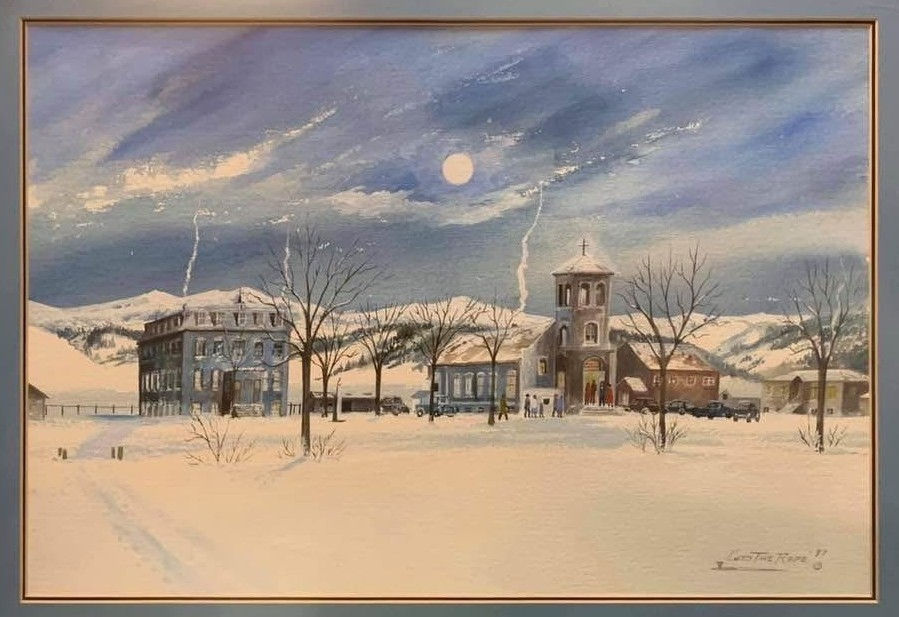

Comments