
April 1977: St. Paul's Mission, Education, Community, Traditions - Feed and Giveaway for Wade Doney; Hand game for Jim Stiffarm, Jr.

In early April, Ray, Irma, Gordon and Edith were up at the trailer visiting with Susie and me. Irma said that Ray was reading a book and that it finally hit them what I was doing here. I asked Ray about it and the book was Vine Deloria’s, Custer Died for Your Sins and the chapter she referred to was ‘Anthropologists and Other Friends.’ She said that Ray told her that I would have to write the truth about this community. I couldn’t just lie about the way things are here. He said that an anthropologist writes about everything, like how people sleep and eat and everything. Gordon said that I was going to make some people mad if I wrote about the community and how things are. Like the council. Gordon said that he was going to start to write a book about me. They all laughed.
I would have loved for Gordon to have written a book about me. It would have been fascinating to read his perspective on my life … at that point, a very young life. And Gordon was such a unique character. He had been raised by his grandfather who was still steeped in the traditions of A’aniiih culture. Gordon was definitely an outlier in the community. There weren’t that many young people who were so interested in the traditions, practicing them and keeping them alive. Gordon was a member of the Hays Singers, one of the most widely known and respected drums in the plains. He also led the dance committee and thus was responsible for the mourner’s feeds. He was a skilled craftsman. Most of the people in the community were doing beadwork or were making star quilts. Gordon was making less popular and challenging objects, such as hand drums.
That I was able to participate in and observe such traditional rituals as hand games, sweat lodges, spirit lodges, peyote meetings and puppy meals was from the invitations I received from Gordon and Edith and Ray and Irma. They were so proud of their traditional culture and wanted to share it with their friends (Susie and myself). I learned so much from them. Salt of the earth, good and kind people. For a lifetime, these folks were family for Susie and me.
As it turns out, Susie and I did observe everything. We did observe what people ate. We did not observe how people slept, unless we walked into someone’s home and they were taking a nap on the couch.
As I noted in my very first blog about our time at St. Paul’s Mission, in Hays, on Fort Belknap, we were never comfortable with our role as participant observers. We actually did great with the participant part. As I’ve noted in my blogs, we were involved in just about everything over those two years. And truth be told, we were pretty effective in our observations. It was what we were going to do with our observations that made us so uncomfortable. Again, as I described in my first blog, I got to a point where I felt and believed that if I wasn’t doing something to make the lives of people better on the reservation, what I was doing as an anthropologist was not helpful.
Over the almost 50 years since doing this work, my feelings have moderated some. Beyond the contributions we made in the community, which were considerable, we captured a point in time in the lives of the A’aniiih or Gros Ventre. Their lives have changed so drastically over the years, being able to capture and record what was going on at the time when the last of the native speakers was still alive, and when the elders still remembered what life was like when the most significant change agents (missionaries, government officials, miners, homesteaders, ranchers) appeared on their doorstep. There is value in discussing those times and also honoring those elders.
I don’t have the mental or emotional capacity to fill these blogs with all the monumental crazy events that took place on a daily basis on the reservation. It was so demoralizing for the people on Ft. Belknap who experienced all this mayhem, and it was difficult and demoralizing for me to think about it and write about it.
The discussion I had with Gordon, Edith, Ray and Irma about ‘what an anthropologist does’ has given me an opportunity to address these issues with my hope that I can do justice to the candor and honesty Ray referred to in Susie’s and my work, without belaboring all the social problems, mayhem and chaos that everyone experienced. It is worse than a disservice to think about this situation without considering the context of how their lives came to be in this place in the 1970s. I’ve written about it extensively and implore you to read about this history. It is impossible and unfair to think about the life I am describing in the 1970s without considering what I would characterize as the most traumatic and severe abuse that any peoples in America have ever experienced. I will summarize by stating, they came to be in this place, because we did a spectacular job of setting them up for failure by monumentally screwing up their way of life and failing to offer them a reasonable and meaningful replacement for what we literally beat out of them. I don’t have confused values so I have to honestly admit that it is very difficult for me to even try to imagine what it must be like to have a confused value system. These people were worse off than being caught between two worlds. Often times, they were just caught in a really dysfunctional, chaotic, self-destructive netherworld. Some people did better than others. But everyone suffered from the chaos. Some people did well enough that they left the reservation and thrived. I got to meet some of these people and I heard stories about them. But our day-to-day observations were on the reservation, so our experience was biased by not knowing more about the off-reservation Gros Ventre. And it is important to keep in mind that the reservation was the only place where a person could truly be a Gros Ventre. Culture is shared and the Gros Ventre live on Ft. Belknap. So to leave the reservation, a person is also giving up a way of life … what remains of that way of life.
Over the two years, I heard often from whites who lived in the surrounding towns, that so much was given to the Indian people, and they failed to take advantage of these opportunities. On occasion, I would hear the same things from A’aniiih who lived in the community. I almost never made the effort to talk about the history and the context I have referred to. My role in the community was to participate, observe and record. My opinion is that it is very easy to come to these conclusions if all you do is look at the way people lived. If you considered how people got to this place, the conclusions become so much more complicated.
It is going to be impossible for me to avoid writing about all the chaos and mayhem, because of the sheer volume and magnitude of the issues.
Problems from alcoholism plagued every aspect of life in the community. Ray asked me not to dwell on it, and I really try. But the impact that alcohol had on people’s lives was too great to totally ignore. I’m just not going to fill every blog with it. Families were destroyed from it. Job opportunities were crushed from it. People lost their lives from it. It was everywhere and it impacted almost everyone. There were so many car accidents associated with alcohol. There was so much violence associated with alcohol. There was so much death associated with alcohol.
All the social problems connected to poverty appeared on the reservation and the impact was observed daily. Unemployment was rampant. People struggled to pay their bills and to purchase food and clothing. The entire hocking system arose to meet people’s financial needs where so few options were available to them. We regularly observed people going without heat or electricity during the brutal Montana winter months. Or people not having access to a reliable vehicle. There is nothing in walking distance in all of Montana.
Teen pregnancy was so common that it became difficult for me to make sense of the way children were raised. What I mean is that traditionally, grandparents often raised some of their grandchildren, because the elderly were the ‘keepers’ of the culture. It was the most effective way for children to learn their language and their way of life. In the 1970s, very often grandparents or even great grandparents would raise their grandchildren, because a very young girl who became a biological mother was in no place to responsibly care for and raise a child. Thus, the traditional practice and the contemporary behavior overlapped.
There was so much vandalism and unfortunately there was so much violence. In many ways, it was remarkable that almost none of it was directed at Susie and me. We were definitely victims of the vandalism and theft, on a regular basis, but we pretty much always felt safe in the community. People in the community could be incredibly cruel to each other. We didn’t experience almost any of that.
I’m not going to fill the rest of these blogs with who got drunk and threw their entire family out of the house. Or who got drunk and ran their car off the road. Or who had a baby at 15 years of age. Or who went without any kind of work for months. As noted, all this chaos was going on daily. We observed it and we recorded it. But I don’t have the mental or emotional capacity to review all this stuff in these blogs.
A lot of it is sort of unavoidable, because as Ray noted … I’m going to be candid and honest and there was just so much of it. But I am writing about people Susie and I care for, cared for and love. It’s just too disheartening and demoralizing for me to spend my days churning it in my brain over and over again.
I thought that context going forward was important to identify.
People figured out pretty early on that we were going to be supportive of the community and of families and individuals when it was possible for us to do so. All these situations took place just in the month of April:
Wilma came over selling raffle tickets for a food basket. The money will be used for the daycare Co-op. We bought tickets.
The Hays Boxing Club is selling the raffle tickets for $0.50 each for a television set. The money will be used to buy new equipment. Doug came over and we bought tickets.
Edith sent up a note with Dory and asked us to drive her to Chinook so that she could pick up her food stamps. I went down to the house and told her that I had to teach at Urban Rural, so I could take her later in the week.
Susie and I were watching TV and there was a knock on the door. Two guys walked in. He said his name was Mike Talks Different and he had a friend with him. He said that they had been drinking in Hays but the guy who drove them here left and they were stranded down here. He said they lived at the Agency and needed some money to get back. “Robert Fox told me that you guys like to buy beadwork” and he took out a medallion to sell me for $5 to get the gas money. Susie offered them coffee, and we sat at the kitchen table and talked.
We picked up Gordon and Edith at the 9:00. We drove them to Chinook so that they could get their food stamps at the courthouse. Gordon offered to buy me some gas for the truck, but I refused.
Joe Kirkaldie asked me to do his taxes and he offered to pay me. I refused to accept the payment.
St. Paul’s Mission and Education
4-1-77
Sister Giswalda called me into the House of Loretto to talk to me. She asked me not to teach 5th and 6th grade anymore. She said that the children really struggled with geography and Sister Bartholomew was going to work with the kids on geography instead of my history. I told Sister Giswalda I was fine concentrating on history in her class.
After getting to know Sister Bart, as she was often referred to by the volunteers, as well as people in the community, I would not have been the least surprised that Sister wanted me out of her classroom because some Jewish guying teaching her Catholic students about the One True Religion was just one bridge too far. And we actually crossed so many bridges during those two years.
I believe that our Passover Sedar actually changed the chemical composition in Sister’s brain as she thought about the Jewish guy in the Jesuit Volunteer Corp. An important part of the Sedar is the prayer hoping for the appearance of the messiah. It was that prayer that caused Sister to announce to me after the Sedar that the messiah had already come.
If I had to come up with the easiest and most direct way to describe the difference between Judaism and Christianity it is that the theology of Judaism reflects a waiting for the messiah and Christianity proclaims that Jesus is the son of G-d and ergo, the messiah has arrived. In my humble (but well informed) opinion, Messianic Jews or Jews for Jesus are not Jews for the reason I just explained. The messiah has not yet arrived. In fact, there is no Jesus at all in Judaism. Not one single word of Jesus anywhere in our holy books. If Jesus is the messiah, you aren’t Jewish.
There are Jews who are waiting for the messiah. I’m not one of them. I’m not waiting for any kind of spiritual savior. We’ve made a pretty significant mess of the world, and if there is going to be some kind of golden age, I firmly believe that it is going to have to be created by humans. There’s not going to be a mystical or spiritual superhero on the horizon. It’s us or we’re just screwed. I think my beliefs are likely the most widely shared by most Jews, and specifically reform Jews who make up the majority of Jews in America.
Thus, I believe that Sister Bart had had enough of the Jews on campus and in her school. She couldn’t say much about it because we contributed to the mission and to the community in so many different ways. The priests, the other sister, the volunteers and people in the community were very kind and accepting of us. Thus, her rejection would have been pretty unpopular… as were so many other of her ideas and beliefs.
4-4-77
I asked Sister Giswalda to show me the House of Loretto. It was her master's thesis, a project in home economics. She just had the house redone. She said that the house was a model for the girls of a good home. It has a kitchen, living room, two bedrooms and a bathroom. The girls cook and sew and clean in there. It was fully carpeted and paneled. She said that we have friends who helped us finance the remodel. “It was worth it to give the girls some idea of a good home and what is possible for them.” They were working on quilts while I was on my tour.
The mission school was cancelled for two days because of a big snow. Sister Giswalda said they would not make up those lost days. She said she doesn't care anymore and that a couple of days wouldn't make any difference. The public school was also closed for a couple days, but these missed days would be made up. One of the classes was made-up on Saturday. The public school made up their missed classes because the teachers get paid by the number of class days and also they have to protect their accreditation.
Later that week, the mission school was called off because the pipes under the school broke and there was no water in the school. The classes missed will not be made-up. The Jacobs plumbing company of Havre fixed the pipe and the tribal backhoe crew dug the pipe up.
Gordon, Edith, Ray and Irma were visiting us at our trailer. Irma said:
The mission used to be a very different place than it is today. You could not speak Indian in the school, and if you did something wrong, Brother Fox would hit you across the fingers with the rung from the back of a chair. If you were bad, he would also hang you on the coat hook and I saw him do this. My father once had an argument with brother Fox, and he pushed him into a barrel of water.
Gordon:
People (from the mission) didn't come here to visit (in the community) like you do now. It's changed since the volunteers came too. No one would sit in the rectory and talk. You used to just go in to use the telephone and leave. No one knew Father Simoneau very well until we started spending time in the rectory. It's just recently that we would go in there and talk to him.
4-5-77
Ray:
I have a lot of questions about the things that they teach in the church. I wonder about Adam and Eve and their three sons and how they had all the rest of the people without incest. So many rules are man-made. Once we weren't allowed to touch the sisters and we were told if we did something horrible would happen. Once this girl went out and really put on a drunk. Sister Giswalda heard about it one day. She saw this girl in church, and she walked up to her and said, “all I see is mortal sin.”
I asked Ray what he thought about the school board election today. He said that both people running were different from who was in the school board now. “I know one thing for sure; they don't know the responsibility and work required for this job. They're not aware of what it involves.”
4-6-77
Doug (one of my students) came to visit at our trailer. He said that he wasn't going back to the Mission school next year because he was tired of Sister Bartholomew and he was having trouble getting along with her in class. He's going to the public school next year. He said that most of the kids in class didn't get along with her.
Mary and Beatrice came over to the trailer to use our bathroom and to get some water because they had no water in the school. They were cleaning the food room since so many commodity foods had accumulated, and they couldn't possibly use it all. They were going to get rid of beans, rice, raisins and evaporated milk.
Mary said that they had the election for the school board on Tuesday. Mary said that she would never run to be a public servant because you can never please anyone here. She said that Tall Chief was going to be school board chairman again. I asked her how this happened since he had resigned. She said she didn't know.
4-8-77
Sister Bartholemew walked up to Susie and I and asked if we spoke Hebrew. I told her I knew a little. She started talking and asked me if it was Hebrew. I told her I didn't think so. She started talking again and asked again. And I told her I didn't know, so she left. I asked Mike about it later. Sister Bartholemew speaks in tongues and wanted to know what language it was. He said that there are a few people on the reservation who spoke in tongues. He said that people can start on their own, they don't have to be induced in any way. The language they speak is a language of prayer, but it is a language some people speak in French, German. Polish or some ancient language. He told us the story about a priest in Rome who didn't know English, but when he spoke in tongues it was English. Someone heard him once who knew English and told him it was English. Mike thought it would be neat to know what language he was speaking. He said he was with some friends, and they prayed for him that he would be able to speak in tongues. And later he got the gift. He said you just know when you have it.
While we were playing pool in Zortman, I was talking to one of the public school teachers from Lodge Pole. About six other teachers were there also. He told me that he wasn't going to be here again next year. He's been here for two years.
We have too many problems with the administration, so I'm going to leave. I've been here for two years, and I really do like it here. But I've had enough of the administration. I was hoping Conway would be the new Superintendent, but with Tall Chief coming back, it'll be the same way. We have a big discipline problem in the school, but the administration won't back us on disciplining the kids. Tall Chief gave us the order not to touch the kids and with hands off policy we can't do anything. One of the teachers did get hit in the chest with a rock but nothing ever happened from it because the boy’s mother came over and told them to leave their kids alone. Another time the kids ruined one of the teacher’s cars and nothing ever happened because the police gave them a run around so it was dropped.
On the way home from Zortman, Tom Jones said it was really sad how many kids drop out of high school.
The main reason they drop out is that someone else drops out and they hang around the school all day telling everyone how great it is. They don't do anything though, except hang around the school. Their future depends on their education. They think they can get any job they want because they're Indians, but they're wrong. There are a lot of minorities, and they all compete for their jobs. Blacks get a lot of jobs too. When they compete for these jobs, the ones with the most and best education are the ones who will get the jobs. The kids have to be made to understand how important an education is. Someone should talk to them.
Chinky and Hazel came up to the mission to visit and to use the phone. Hazel said that their son Art works at Flandreau and he would like to work here someday, but he's waiting for the school systems to improve. Hazel said that she wished the Mission still had a high school. “The Mission high school was much better than the public school.”
4-9-77
Bunky McMeel was working with the backhoe crew to fix the water pipes and he stopped in to see us. He told us that the Kuhr’s Ranch was sold just northwest of the reservation and that he would probably be out of a job now for the summer. It was one of the largest sales in Montana's history and sold for over $7,000,000.
4-10-77
Mike and I were talking in the trailer and the phone rang at midnight. Mike answered it. The guy on the phone was calling from either Spokane or Seattle. He asked us to take a message down to his parents to come down to the Mission so he could call them back. Mike said that it was late and asked him if it was an emergency and he answered yes. Mike asked him what the emergency was and the guy told him that it was none of his business. Mike said it was late and everyone was asleep and if we were going to run a message we'd have to know the emergency. The guy said that his brother was in a car accident, and he broke his back. So, he drove to his parents’ house. They came up to the mission and the guy called them. They laughed and talked on the phone for a while and when they got off, the mom told us that he was just lonely. We were taken. She offered to pay us for coming down to deliver the message so late and we refused.
This was Holy Week and Mass was celebrated almost every night this week. Sunday was Palm Sunday, and the church was packed to get the palms that were distributed. Thursday was Holy Thursday to commemorate the Last Supper and the first celebration of the Eucharist. The church was less than half full. Good Friday commemorates the crucifixion. Father Bichsel and Father Retzel switched between Lodge Pole and Hays. Father Bichsel took the service in Hays. Marvin and Richard Bushie served. One of the teachers from the Hays Lodge Pole School did the readings, and Father Bichsel and Bill did the readings in Hays. Everyone went up to kiss the crucifix and almost everyone took communion. The church was a little less than half full.
After the service, both Bill and Father Bichsel apologized to Susie and me for the passion readings. Both felt that it caused too much misunderstanding and prejudice towards Jews. We discussed it.
Yes, the whole Jews killed Jesus thing has been a shitstorm for my people for thousands of years. Millions of Jews have lost their lives from it. An evil waste of precious lives. Of course, the irony from all this mess is that if Jesus died from natural causes, there would be no Christians, there would be no way to disappear one’s sins and there would be no everlasting life. (So, if the Jews did kill Jesus – you’re welcome – we gave you heaven).
Mike said that Bill Bichsel announced that communion could be taken without confessions because he didn't have time to hear the confessions before. Mike said that this broke a long-standing tradition. The church was packed for the Easter Mass celebration. Father Retzel dispensed holy water for people to use in blessing their homes.
At the Christian Missionary Alliance, there were about 10 families. A few of them were from our school.
4-11-77
Diocese of Great Falls, Annual Financial Report for the Fiscal Year June 30, 1976 (1975-76)
Parish: St. Paul’s Mission, Hays, MT
Receipts:
Collections: $2589.36
Grants, bequests, legacies: $18,793.25
Care and Share: $99.12
Bazaars, Carnivals: $1566.00
Diocesan publications: $49.00
Contributions from other societies (Catholic Indian Congress, Washington DC): $36,000
Interest received: $3628.66
Rent of Church property: $4141.99
Other receipts: $3775.00
Repaid loans: $400.00
Exchange: $2228.81
Vigil lights: $322.75
Total Receipts: $ 73,594.38
Disbursements:
Car allowances and travel: $765.13
Priests insurance and retirement: $715.00
Altar supplies: $147.97
Bulletins, missalettes, choir music: $254.81
Office supplies: $674.23
House provisions: $10,812.92
Rectory:
Utilities and telephone: $12,242.02
Improvements and maintenance: $640.09
Church utility and telephone: $688.88
Church improvements and maintenance: $2147.55
Janitor’s salary: $7856.07
Diocesan publications: $49.00
CCD salaries and expenses: $$864.21
School expenses: $ 22,661.28
Insurance and taxes: $3287.78
Loan: $400.00
Care and Share: $99.12
Diocese of Great Falls: $5000.00
Workshops: $3185.74
Cash: $496.94
Total Disbursements: $72,988.74
Summary of indebtedness:
Balance at end of previous year: $115.00
New debt during year: $3,775.44
Payments made during the year: none
Balance at June 30: $18,775.44
I knew the mission was operating on a shoestring. I have no idea how they managed to pay their bills. The sisters ran every kind of fundraiser known to humankind to afford supplies for the school. The volunteers were making $50/month during the first year and $100/month the second. We also used gas that was provided by the mission and we ate. A lot of our food came from the commodity food program, but we also shopped at grocery stores. The mission’s finances were an amazing proposition.
The new mission school cost $275,000 to build. They used the insurance money from the old school that burned which came to about 100,000 - $150,000. Then they received a loan of about $125,000 from the Bishop of the diocese. The mission used to have 3,000 more acres. It's called the Old Mission Sheep Ranch. Ray Williams leases this land now. The Jesuit order took it over and they lease it now. The Jesuits took it away from Saint Paul's Mission.
Jim started at $1.60 an hour. Now we makes $2.35 an hour. Beatrice and Mary make $2.25 an hour. They get paid out of the money from the government program for the hot breakfast and lunch.
Father Simoneau was sick for a few months and after seeing a doctor was admitted to Northern Hospital in Havre. Later he was diagnosed as having pneumonia on top of emphysema. Later he fell and broke a vertebrae. On Sunday, Father Retzel was admitted in Havre with pneumonia. Sister Giswalda said that his problem was that he was spreading himself too thin going to Havre all the time. His primary duties are here and he has to do his administrative work before his parish work.
Father Bichsel was sent to the mission from Tacoma, to help with Holy Week. Father Bichsel was talking to us about the Jesuits and mission work. He thought it was incredible that Father Retzel was placed in the Superior position over Father Simoneau after Father Simoneau had been superior here for years. This switch caused a lot of bitterness. And the fathers never got along after this. Father Bichsel said that it was a known fact in the past that priests who couldn't make it in another area were placed in the missions. In the Jesuit order, the first priority was the universities, then the schools. The last priority among the Jesuits was the missions. Those who didn't make it elsewhere were sent to the missions. So not the best priests ended up at the mission. He thought that maybe the new provincial might put the missions in a higher priority since he's an anthropologist. He's in Alaska among the Eskimo.
4-12-77
One of the seven sacraments will be held next month. All the 7th and 8th grades at the mission will be confirmed. Only one person from the public school will be confirmed. Father Bichsel held the confirmation class this evening.
The mission is going to lease two fields to put in oats this year. The mission volunteers are all saying that new fences have to be put up, but Father Retzel will have to keep it enforced to keep the horses out. Frank said that oats will kill a horse. When they are ripening and if the horses get into it, it's like poison, so that'll keep them out. Davey Hawley is putting in the oats.
4-13-77
A woman I was speaking with asked me what the prayer meetings were like. She said she doesn't like any of that holding hands stuff. She used to think that the prayer meetings were for people who went overboard with religion. She doesn't think she'd like it. She heard that people who go to the prayer meetings try to preach to other people. “It just doesn't mean anything,” she said. “When people leave the church, they forget all about religion. I live with them, I know.”
Don Addy came to the Mission this afternoon. He was holding a crop production meeting for the ranchers in the area. Don is an extension agent on the reservation. He said he wanted to hold this meeting before planting so that people could ask a lot of questions about seeding, fertilizing, etc. There were about 20 people at the meeting, and they held it in the new gym.
4-14-77
Frank made a poster for the Catholic Indian Congress. He drew a picture of Jesus shaking hands with a black robe. There is also information about the Congress on the poster.
Theme: Healing between people; June 17 to 19. Saint Paul's Mission, Hays, Montana.
Director: Father Francis McNutt., O. P.
Camping Day: June 16.: Memorial Mass with Bishop Schuster as celebrant.
Prayer for physical healing and healing between people.
Team members: Barbara Schleman, Father Paul Schaaf and The Living Sound Singers.
Frank had the posters made in Havre and he paid for them out of his own pocket. He had 100 posters made and they will be sent to the missions, reservations and parishes all over Montana, North Dakota, Idaho, Washington and Canada.
One of the volunteers was telling me that Father Retzel is very strict about his views on family planning. He could never get a course on family planning into the school. That's why when a visiting priest comes to the mission, you see all these young girls going to confession.
He also said that the Indian school board at the mission doesn't get very excited about their job because they have so little power to make decisions. “No one will disagree with Sister Giswalda. Most of them had her for a teacher and in many ways she still treats them as a student.”
4-15-77
Al Chandler came into my class today and he talked to my kids for over an hour about the importance of an education. He told them how important it was to complete the high school education; that it was the only way to make something of yourself. Father Retzel arranged to have him speak here and it was really good for these kids. He works for Xerox and he services the machines in this area. He lives in Glendive. He was in town for the feed and giveaway for his nephew.
4-16-77
Mike got in touch with the Living Sound and he gave them a choice of accommodations: either camp at the mission, stay in people's homes or stay in cabins in Zortman. They decided to stay in the Zortman cabins, so Mike made reservations. The mission has to foot the bill for the cabins, and I told Mike I thought they could have stayed here in Hays to save the money. He said they wanted to be together and that they were both a professional and spiritual group. The Living Sound was the band that was going to be performing at the Catholic Indian Congress this summer.
4-17-77
The Mission is running a film series on Sunday nights to raise money for the Catholic Indian Congress. They are calling the series Sunday Night at the Movies and the films are being shown in the new Mission gym. The movies are shown at 7:30 and they are charging a dollar for adults, $0.75 for high school students, $0.50 for grade school and $2.50 for a family. Preschoolers get in free. They are also running a concession stand at the movies. Mike and I changed the original order because Father Retzel picked a series of films that the people here aren't going to be interested in. The first film, Abbott and Costello meets Captain Kidd lost money. The film shown tonight made $25. The series runs till June 12 and most of the films are John Wayne and Paul Newman westerns. We anticipate that the westerns will bring in a lot of people.
4-18-77
Gordon and Edith are trying to get their marriage blessed. Three years ago, Edith never would have tried it, but the church had changed so much. Now she has hopes that her first marriage can be annulled. She told Father Retzel that she just wasn't ready for marriage the first time. She wants this marriage blessed because she missed being able to go to confession and take communion.
Edith liked the old Mass (Latin) better because of the good songs they used to sing. They had a great choir.
4-19-77
I was sitting in the kitchen talking to Gordon and Edith and Doris Thomas walked into the house. She said to Edith that her mother wanted to know if she would be her sponsor for the confirmation. Edith said that she didn't know if she could since she can't take communion. That she would talk to Father Bichsel about it. Doris said that she would come back this evening. It was a very sweet interaction between Edith and Doris.
4-19-77
Father Bichsel was in the trailer in the kitchen talking to Susie and I. At 9:30 a car pulled up and honked. Susie stuck her head out of the door and they asked for Father Bichsel. He went out to talk to them. It was John Doney and Joan Anderson, a teacher at the Hays Lodge Pole School. They made arrangements to get married at the mission in August. With the new diocese rule, they have to give notice of plans to marry at least four months in advance of the date because they have to go through a four-month course with the church before they can get married.
4-20-77
Since Father Retzel has been in the hospital with pneumonia, changes have been planned for the mission to relieve the tension from Father Retzel. The priest in charge of placing Jesuits in the province said he recognizes our need for a new priest with Father Simoneau being sick. One of the changes concerned the phone. A meeting was held with volunteers and Bill Fuglevan, a contractor from Havre, who has started coming to the mission on Wednesdays to help with the mission books and also to help with any building and remodeling projects. It was decided that the mission won't run anymore phone messages. All messages will be posted that come on the bulletin board. Also, the phone hours will be cut back to only a few hours a day. A wall phone is being taken down in front of Father Retzel's room so that he won't be bothered and so he'll get more sleep. Another phone is being placed in the doorway leading into the living room so that people won't stay all night and visit at the rectory.
4-21-77
Father Retzel put Mike's name on the Catholic Indian Congress account so that he can take more responsibility on the project. Mike decided on the location of the Catholic Indian Congress. It will be held on the field just north of the new gym. The Arbor will be built facing the mountains and the platform facing the Bear Paws. Parking will be down in the creek bed and camping will be around the platform and arbor. The electricity will be run off the lines from the convent.
4-21-77
Edith:
Venetia and Junior are going to be confirmed on Tuesday. I thought about asking you guys to be their sponsors, but we were afraid that Sister Bartholomew would not let us do it because you are Jewish. I shouldn't be able to do it because I can't go to confession or take communion.
Gordon said that he didn't know about other people and that he could only speak for himself, but he was upset about the mission blocking the door to the living room. I don't know where we're going to do our visiting any more. We can't go to the rectory and we can't be here after 11:00 (trailer) because your roommate wants to go to sleep. It's no fun here anymore. I know for myself that we won't be able to visit you at the mission with that door blocked off like that.
4-22-77
At 2:00 this afternoon, there was a special course for this confirmation class. All the 7th and 8th graders at the Mission school, and about ten 7th and 8th graders from Hays Lodge Pole School will be confirmed. They came up to the mission for the class. The kids, Mike, Susie, Bill, myself, and Nade, who would be sponsors, Father Bichsel and Sister Bartholomew all met in room five. The class began with a slide show and record presented by Sister Bartholomew on confirmation. The kids didn't pay much attention to the show, and they really didn't pay much attention to the whole class. The kids are too young to understand the meaning of confirmation. It is one of the sacraments of initiation. At baptism, the parents decide for the kids to accept the Christian way of life. At confirmation the kids on their own decide to confirm the pledge that their parents made to accept Christianity and Christ into their lives.
Instead of concerning themselves with this sacrament, the kids were more concerned with their involvement in the service. After the slideshow, Father Bichsel gave a short talk to the kids about confirmation. He talked about confirmation of the kids as an initiation rite and as coming of age. He compared it to the Jewish Bar Mitzvah and the initiation rites of the traditional Indian cultures. He talked about the kid’s awareness of the meaning of justice, the ability to forgive others and the acceptance of people. He used the example of accepting a new kid into school, even though they might be a little different from us. He told the kids that confirmation was the time when they must begin to live out the things that they have learned. The kids did not pay much attention to the talk. They laughed among themselves.
Then Father Bichsel split the kids into groups of three to talk and to ask questions. Father Bichsel and Bill took one group, Susie and Nade took another, and Mike and I took another. Mostly everyone talked about the meaning of confirmation, and the kids asked questions about what it was after the talk. It still seemed like they didn't understand it. Mike told them that this is the time for them to decide if they would accept Christ into their lives. And he told them it was the most important decision they've ever made. He said that no one could ever force them to make this decision, that it had to come from their heart. Then the kids were quiet for a while. Then Kenny raised his hand and asked me if I was Jewish. I told him I was. Then he said, “do you believe in the Messiah?” I said yes. Then he said that he believed in the Messiah and I said that was good. I walked out of the room to find out when we were going to be going to the church and Mike told me that I didn't hear his next question, which was, do you believe that Jesus Christ was the Messiah?
That Kenny understood enough to ask me that question was quite impressive. At age 74, I’ve evolved into not believing in a messiah. At the time Kenny asked me that question, my honest response would have been that Jesus was not the messiah. Jesus was not the son of G-d. Jesus was a rabbi; just some guy. That response would have blown up the confirmation class. It would have made Kenny’s day. Glad I missed it.
We went over to the church then with the 29 kids getting confirmed. Father Bichsel held a short service and asked the kids to meditate. For a short time, the kids were very restless. Then he lined them up at the back of the church alphabetically and put them in rows, the way they would walk down at confirmation on Tuesday. Then the kids walked down and filled the first two rows of the pews. The sponsors would be behind them. Father Bichsel gave a short talk and told the kids that practice would be tonight at 7:00 with the sponsors. The kids were laughing and talking to each other. Father Bichsel started to ask them when practice was. The answer was from 5:00 to 8:00, but no one said 7:00. He dismissed them.
4-23-77
Mike said that it was customary to give presents to the kids getting confirmed. He bought Chester a bible and Bill bought Martin and Junior tool sets. I don't know if other sponsors got presents for the kids getting confirmed.
The mission is running a film series called Sunday Night at the Movies to raise money for the Catholic Indian Congress. The films are shown at 7:30 every Sunday night at the New Mission gym. The Mission is advertising the film series and the Camp Crier every week. The articles are free and they have been putting the articles on the front page. The movies and concessions have been about $75 and we have been just breaking even. Tonight, the movie was cool Hand Luke.
4-24-77
Edith said that she was going to be a sponsor for confirmation this week for Doris Thomas and that Caroline was going to be Venetia’s sponsor.
I got permission to do it from Father Bichsel. I didn't know if I would be able to since I can't take communion; since Gordon and I weren't married in the church, and I was divorced. Caroline said she couldn't take communion either because her and Bobby weren't married in the church. She and Opal’s son were divorced, and Bobby is her second husband. Our marriage wasn't blessed either. Edith said that the church has changed a lot. You can do all sorts of things now that you couldn't do before. I wish they told us about these things before. (She sounded bitter). They taught us that everything was so holy. I really had it out with Sister Bartholomew. We first argued about you being Junior’s sponsor for confirmation and then when I told her that I was going to be a sponsor, we argued about that. I told her that I go to church all the time and that I pray all the time. I asked her, doesn't that make me a good Catholic? She said that it makes me a good person. I got so mad that I just walked away from her.
4-25-77
Father Bichsel called me into his room and said he wanted to talk to me. He said that Susie and I might not be able to be Venetia and Junior’s sponsors at the confirmation. I told him that Caroline had already taken Susie's place because she was in the hospital. Father Bichsel said that he was reconsidering me doing it because he was afraid that Sister Bartholomew would make a scene when the Bishop came here. I told him that Sister Bartholomew had already known that I was going to do it and had confronted Edith about it. Sister Bartholomew asked Edith who the sponsors were going to be for her kids, and Edith told us that we were. Sister Bartholomew told her that we couldn't do it because we weren't Catholic. Edith said that it didn't matter. She told Sister Bartholomew that we were religious people, we just have a different faith. Sister Bartholomew said still we shouldn't do it. Edith then told her that she was going to be a sponsor and she asked Sister Bartholomew about that. Edith told her that she was a good Catholic, going to mass every week and all the holidays, but she couldn't take communion. Sister Bartholomew told her she was a good person. Father Bichsel said that he might change his mind because Sister Bartholomew had him really mad about it and he didn't mind getting her upset. I told Father Bichsel it wasn't worth the hassle and we'd tell Edith to find someone else to sponsor Junior. Father Bichsel said that Sister Bartholomew was making him mad. “I'd let you do it. I want you to be a sponsor, but I'm afraid she'll make a big scene at the confirmation with the Bishop here and she'll embarrass you. I had a big argument with her yesterday about what she teaches the kids in school. You can't teach religion to the kids in school. It can only be taught from the families. She's teaching these kids magic. And I told her that I thought that. I don't even know if she heard what I said.” I told him I didn't mind not being a sponsor.
Yikes. I can’t imagine that Margaret Mead ever ran into these sorts of issues. Edith wasn’t the only person who asked us to sponsor their children at confirmation. We were honored that people thought we could be good role models for their children. But this was a religious thing affirming the acceptance of Christ as the messiah and personal savior. Neither Susie or I were good models for that affirmation. It was best that we not do this, and we didn’t.
The Bishop was supposed to come to the mission tonight. All the sisters were in the school from the time the kids went home until 7:30 cleaning their rooms. They wanted to make sure that the school looked nice for the Bishop and they wanted to impress. They straightened out all the materials, dusted all the shelves, desks and chairs. They also had Mike and Bill in the school all afternoon, vacuuming the rugs and mopping the floor at the last minute. The Bishop decided not to come until noon on Tuesday. When Father Bichsel saw what was going on in the school, he said that was very typical behavior in the church.
Traditions
4-4-77
I was telling Beatrice about the coyotes we heard Friday night. She told me that if a coyote follows you, it's bad luck. She said her mother and father and grandmother once took a trip to the Agency. They had to go in wagons in those days. Well, my grandmother wasn't feeling well when they left, and they took three days to make the trip. On the way home a coyote followed them. It stayed the same distance behind them the whole way home. My grandmother got very sick and when they got home my father told us that she wasn't going to make it because the coyote followed them. And sure enough, she died.
Beatrice said that she likes to ride in the car and can do it for hours. I can't sleep in the car, so I just sit up and keep the old man company. Me and him aren't one to talk much together. We usually just put in Indian singing on the tape deck. We have one in the car. We don't sing along, we just listen. Jim used to be a good singer, but he can't sing much anymore.
4-6-77
Mary said that Ben put his braids over his ears in front and they looked funny. She said that the right way to wear braids for men is to wear them in front of their ears and for women to wear them behind their ears.
4-7-77
Bill Stiffarm had a feed for all the Stiffarm family. All of her (Beatrice) children and some of the older grandchildren were invited. Edith said that it was very unusual for Bill Stiffarm to put on a feed for their family because they are usually taken care of by the dance committees in different districts. Gordon and Edith decided not to go to the feed because they had no way to get there. Davey Gone, Bobby and Caroline, Freddy and Alberta went to the feed. Gordon said that they had the feed for them because of the strong Indian traditions put on by the Stiffarm family and they were recognizing the strong traditions of this family.
4-8-77
Chinky and Hazel came up to the mission to use the phone. Hazel said, “we were trying to learn some prayer in Gros Ventre, but there aren't too many people around who can speak Gros Ventre well enough to translate some prayers. Someone made a tape for us with the Hail Mary and Our Father in Gros Ventre. Jim Stiffarm's father used to teach catechism at the mission. He taught catechism in Gros Ventre to people who didn't speak English.”
Chinky asked Father Bill Bichsel where he thought the medicine men got their power. Father didn't have an answer. Chinky said, “well they sure had power. They must have got it from God, but some people use the power to do bad things.” Hazel said, “my mother still prays and uses the sacred pipe. If someone in the family is sick and she prays for them to get better. She gives a cloth to the pipe and prays through it. Jeanette Warrior has the pipe, and my mother asked me once to take her over to Jeanette's to pray with it. I went in the room where the pipe is but I got scared and left the room and left my mom there to pray. The pipe was wrapped in the bundle and the bundle was tied onto a tripod. My mother didn't open the bundle, but she tied the cloth that she had brought to the outside bundle and then she prayed. There is an old Indian burial ground on the way to our house. There is also a cave up in the mountains near our house and there are Indian paintings inside. Some kids have marked up some of these paintings.”
4-13-77 The Feed and Giveaway for Wade Doney – May his memory be a blessing.
Susie and I went over to Camie’s to give her money to help with the feed and giveaway. Sisters Kathleen and Laura were there helping her make plans for the feed, and Letty and her baby were also there.
Irma said that she would help Camie and Richard with their giveaway and feed for their son, Wade, because they are family. She said she would buy them a few blankets to give away.
4-16-77
The preparations for the Wade Doney feed began at 8:00 Saturday morning. Pat did Camie's hair. Mike, Bill and I put down the gym tarp and the chairs were put up. Socksy asked Sister Giswalda if they could use the chairs because they were the school chairs. Sister counted the chairs and had Socksy signed for them and promised that they were to be returned in the same condition that they were borrowed. The chairs were set up in rows perpendicular to the stands. We set up a microphone on the table and the table was covered with a Pendleton blanket. Two pictures of Wade were also on the table. Behind the table were the blankets and materials that were going to be given away.
Marge was helping fix food for Camie’s feed. She said that Al Chandler was her nephew. When he first got out of the army, he lived with Marge and George. He’s Camie’s brother.
Socksy, Sisters Laura and Kathleen, Marge, Letty and Susie were in the kitchen preparing food for the feed. From 8:00 until 12:30. They boiled half a beef that was donated by Clifford Doney (Richard’s brother). Potato salad, fry bread, white bread, juneberry soup, baked beans and beef soup, cookies, pies and cakes were also brought in and served. The beef soup was made by adding macaroni, tomatoes and large cans of veg-all to the water the half beef was boiled in. The juneberry soup was made by boiling the berries in water and adding sugar. Then flour and water mixture was added to make it thick. A lot of food was donated by people who came. They brought the food, most of it already prepared. The plates were prepared by the same women before the feed.
At 9:00, Richard and Clifford’s son brought in the blankets that would be used at the giveaway. They were brought in boxes, one Pendleton, star quilts and a lot of blankets. There were about 85 blankets stacked up on the bench. They cost between $8 and $12.00 apiece. The star quilts cost about $50 to 75 a piece.

When we were in the kitchen, Marge said that no one could take any food or eat any of the food or throw away any of it until after the feed. And nothing could be done with the food until it was blessed. The prayer to bless the food would be in Indian. Marge thought that Luke Shortman might do the prayer, but she had seen him the night before and he wasn't feeling well.
People started to come at 12:30. They filled up one side of the gym in the bleachers, and the other side was not filled up until just before the giveaway started. People would do anything to avoid being conspicuous, so it took a whole group to sit on the other side. The giveaway was supposed to start at 2:00, but it didn't start until 3:00. Until that time, people visited with each other.

Gerald Stiffarm was asked to be the MC and he started the ceremony by introducing Camie and her family and stating the purpose of the feed and giveaway. He said that the memory of Wade was why they were here. He gave a short history of Wade. He said that he had been 19 years old and died last April. He said that Wade went to school at the Mission and at the Hays Lodge Pole School. “When he was killed, he was going into the army like a true Indian brave to serve his country. We should be proud of our traditions, and it makes me feel good to be at an occasion like this with my people. We should all remember Wade on this occasion and his great journey to the happy hunting ground.” Then he called Camie's family forward and they sat in the chairs in front of the table. Richard, Ralph, Darian and Rusty sat in front of the table. Gerald handed Darian a picture of Wade from the table, and she held it during the giveaway. The other picture of Wade remained on the table for the giveaway. Gerald announced at the microphone. There were a whole lot of names in a booklet made out by Camie, and some of the blankets had the names of the persons they would be given to. Gerald and Camie went through the list before the ceremony started.
Then Gerald called Ray up in front of the gym. Ray made a short speech in front of the people. He said that it was a custom of the Gros Ventre people to have a prayer before a ceremony like this one. “I am not fluent enough in Gros Ventre to say a prayer in Gros Ventre, but I do have a tape that a man in our tribe who did say some prayers for me. It is our custom to invite the spirits to share in our ceremony. All you Gros Ventre out there should know that we invite He-Who-Starved-to-Death. You should also know that we invited the spirit, The Last Child.” Then Ray removed his hat and everyone stood and a prayer in Gros Ventre was said on the tape. Then Ray called up Jim and Lyle and they sang an honor song in Gros Ventre. Ray used a hand drum. It was a regular honor song and it ended with light rapid tapping on the drum. Everyone stood and removed their hats during the song. Jim and Lyle didn't sing because neither of them knew the song. Then they returned to their seats and everyone sat down.


Camie gave her camera to Susie and asked her to take pictures of the giveaway and ceremony. Then the giveaway began, and Gerald called the names and Camie and Socksy passed out the blankets. When the person was called up after receiving the blanket, everyone shook Camie's hand and then walked down the row of seats where the family sat, and they shook everyone's hand in the family. If a name was called and no one came up, the closest family member attending came up to receive the blanket. If a couple was called, either the husband or wife went up but not both. Everyone there received a blanket and most people in the community received one. The elderly in the community are recognized as they receive great respect and often are given their gifts first. Also, Rusty Farmer, the BIA Superintendent, received one, but he was not there.
After the blankets were given away in the memory of Wade, some special gifts were given. Ray and Irma received a blanket. Al Chandler gave them $20.00 for singing the honor song. Al also gave away $5 to Jim and Lyle and gave bustles away to two people from Oswego on the Fort Peck Reservation. Al gave all these things away in the memory of his nephew. Marge said that Camie didn't have to give anything to her relatives, but she did give things to her family. She gave these special gifts. A shawl to Sister Kathleen and Kathleen's mother, star quilts to Brian, Bill, Susie and I, A Pendleton to sister Laura. Clifford and Socksy, a star quilt. Blankets to the pallbearers at Wade's funeral, Hank, Phillip and Dale. She also gave Gerald a blanket. The giveaway was then over.


The women in the kitchen then started to put together the plates of food and the soup. Beef and juneberry soup were passed out with a ladle and a huge tub. After most of the food had been passed out, Gerald announced that Richard said it was OK to start eating. Ray came over to me and laughed. I had already started eating with Marilyn and Jenny. He told me that it used to be that if you started eating before you were told you could, you would be asked to sit in the middle of the room and eat soup until they stopped feeding you. It was very embarrassing. I told Ray that I was just following these two “good Gros Ventre girls,” Jenny and Marilyn, and they both laughed. The giveaway lasted for almost two hours. And the feed lasted one hour. There were about 200 people attending. After people finished eating, they began to leave. Many people took food home with them in plastic bags and containers.


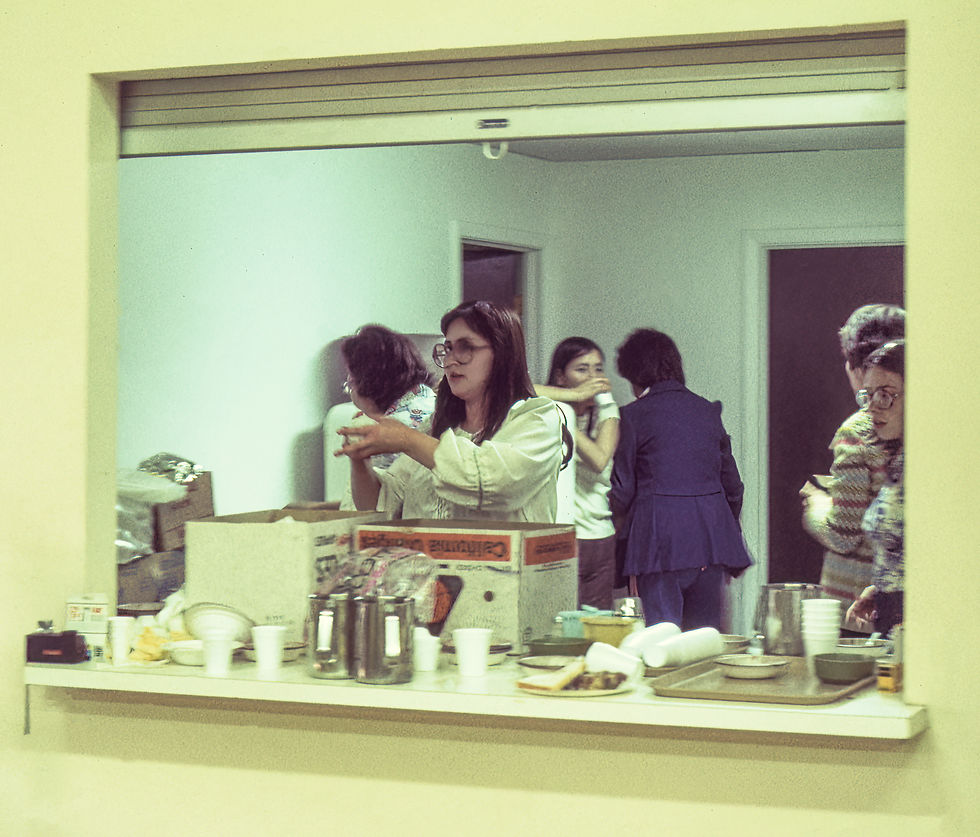

At the giveaway, Peggy was called up and given $5 as the Midwinter Fair Princess. Her sister Jenny said that it was the first time she was recognized, and it was about time. Camie's family, Socksy's family, Kathleen, Laura, Brian, Bill, Susie and I cleaned the gym. We sat around after we were done cleaning and ate pie and drank coffee. We finished at 6:30.
If Camie had been upset through the day, she never showed it. She seemed in a very pleasant mood all day and joked around after it was over. She was nervous before it started, but that was more because of putting it all on and having so many arrangements to make. Richard was very quiet the whole day. He is always very quiet so it was hard to tell if he was more upset by the day.


At 7:00, there was a memorial mass at the church. Father Bichsel did the service. He celebrated a regular mass. Sisters Kathleen and Laura did the readings from their chairs. There were about 30 people there, all of Camie's family and Socksy’s family. There was mention of Wade about three times in the service. Father Bichsel said that Wade was promised eternal life in his belief in Jesus.
4-16-77
At Camie’s feed, Marge said that you can't throw anything away, like the bones from the soup until the feed is over. You can't eat any of the food until the prayer is said and it is blessed. If you say to someone that you are going to have a giveaway, you have to have it. Once Marge was thinking about having a giveaway in her son’s honor, who was stationed in Vietnam. She asked him if he wanted one. He said no because they may be getting ready to have it and something might happen to him. She hadn't told anyone her plans so she didn't have to have one. George and Marge said that long ago people used to bring their own sugar, cream, silverware, cups, etc. to feeds and also a bucket to take lots of food. They don't do that anymore. People would just think you were being greedy if you did that now.
4-14-77
Mike, Susie and I were at Urban Rural and we were watching the movie Chief Joseph. It was a videotape. Itty walked in at the beginning when a dead man is brought into camp and the women started crying and mourning. She said that they were ‘rattling their tongues.’ People used to do that when they cried in mourning. It's like a very shrill trill of the tongue and a scream and whistle combined.
4-15-77
We were driving Gordon and Edith home from Chinook, and they pointed out to us the old road from the Agency to Hays. The old road is now covered with grass on the prairie. It winds back and forth across the new black top highway. At first it was a dirt road and after a rain it was tough to drive on. It was all mud. And not just any kind of mud. It was often referred to as gumbo. Then they graveled the highway and it's much easier to drive on. Then they put in the new paved highway.
4-18-77
Edith is upset that people are trying to teach Indian culture in the schools because the Catholics took the “Indian” out of them. All the other tribes still have their culture. She said sometimes she questions her religion. She said if it is the True religion they ought to have the answers.
4-21-77
Mary told us that there was a meeting at the recreation hall that was put on by Kenny Ryan from ONAP. It was about teaching the Gros Ventre language and culture. It was a good meeting, but there weren't many people there. I took my mother. Luke Shortman was there, and he said two prayers in Gros Ventre. They talked about teaching Gros Ventre in the schools, but it was decided that the parents should learn it first before the children and the parents can teach the children. Ray said that he thought he could get some money for people to teach Gros Ventre language and culture. He formed a committee of Ray, Mae Stiffarm and Teresa Walker. We got people who weren't working so they can devote most of their time to this program. They're going to have another meeting in two weeks. I made up my mind that I'm going to learn to speak Gros Ventre. My parents spoke Gros Ventre around the house, but I didn't learn to speak it fluently. I can speak and understand some words and phrases just from what they spoke in the house. Ray also said there was a Gros Ventre dictionary in Great Falls, and he was going to try to get a hold of that.
Gordon and Edith came over to visit. Edith said that people used to pierce their ears using porcupine quills. They would just push the end of the quill into the ear and the quill works itself all the way into the ear. “It hurt, but don't you have to suffer to be beautiful.” She laughed. “My mother had her ears pierced that way. People don't do it anymore.”
Edith:
Before we moved into our new home we lived in a log house. We had two wood burning stoves. It had an oven in it so we could cook on the top and also use the stove. The only way to regulate the temperature was to add or take away wood. You could add wood to make the temperature warmer. The wood burning stove was also attached to the water heater. If you took hot water out, all you had to do is replace it to get water heated in it again. It was really nice to have a wood burning stove with an oven. I wish we still had it. We had two, one with the oven and one like we have now to heat the house. We didn't have any electricity. We had a radio with batteries. I don't know if I'd miss electricity if we didn't have it.
Gordon asked me if I wanted to go to a peyote meeting on June 11th in Pryor on the Crow reservation. Freddie was putting it on with Edith and Gordon. I told him I'd let him know later. It was being held to pray for Ray's health.
Gordon said there's going to be another Spirit Lodge soon.
Willie Bradley is going to be putting it on with Kenneth Gopher. Willie wanted to have it next weekend, but we may be going to Missoula, so it may have to wait until May. It will be at Running Crow Cooley where it was last year. Running Crow Cooley is directly west of the mission, north of Davey Hawley’s place. I can't promise you for sure, but I'll ask Willie if you can come to the Spirit Lodge with me. I don't know what he'll say, but there were white men in the Spirit lodged with me before. Some white doctors were there before. If you go, bring something like a blanket. You give this to the medicine man. If it's small, he'll tie it to the spirit lodge. He'll keep these things. After the spirit lodge is over, you can go into the spirit lodge. You can ask about how your grandfather is doing. Then the Spirit will leave, and he will be gone for a while and then he'll come back and tell you how your grandfather is. He will go all the way to Cleveland to find out for you. It's also possible for the spirit to bring you back a dead relative to talk to. But this is very dangerous. I could ask to talk to my grandfather, but when he comes, he may want to take me back with him. The spirits want to do this. They can take you back with them. This hasn't happened yet that I know of, but you would be dead if they wanted to take you.
In the last Spirit Lodge, Willie wanted to talk to his father. He wanted to ask him some questions. Kenneth told him that he couldn't do this, but if he did, he should be prepared to go back with his father because the spirits will want to take him back with him. So, Willie didn't ask to talk to his father because it was too dangerous.
You might get scared in there because it does get scary. And it does last a long time. The last one was short. It only lasted 4 hours, but it could last all night. It's pitch dark in the lodge, and you can't see anything. The only time you can see anything is when the lightning spirit comes. The lightning spirit will come in and you'll see the flashes of lightning that are so bright that you can see everything inside. Then you'll hear a loud thud in the center of the floor. When the lightning spirit comes in. It does get scary. Then there's a rattle that bounces all over the spirit lodge. Around the top of the lodge and around the floor of the spirit lodge.
Edith said that she wouldn't be going this time. “Once was enough for me.” Sienna said, “I'm going to be scared when I go. This is the first time that I've ever been to a Spirit Lodge, but it won't be so bad. I know that Gordon is there, and other people that I know. I'm taking my son there for a cure for his eye and for his legs. He walks with his feet pointing out.”
Gordon:
The last time Edith was holding my arm so hard from being scared that she cut off the circulation in my arms. When the rattle goes around and the bells around the top of the lodge start to ring, it's pretty scary. If you don't believe in what goes on in there, that rattle and the raw hide ball will sure raise heck with you. The rattle will jump all around you or the raw hide will tie you up to the ceiling. No one can untie the raw hide ball. It's tied in such a way that no one can unravel it. But Kenneth passes it around; he says a prayer over the ball and the rawhide just comes apart.
You just go in there and pray. That's what I do. I just go in there and pray. There are some people who are Catholic and Protestant who don't believe in praying in the Indian way? They just say they don't believe in it, and they don't go in the Spirit Lodge. My mother is like that. She's a strict Protestant and she doesn't believe in the Spirit Lodge. She says that she doesn't believe in any of it. All you have to do is pray in there. We all pray to the same Great Spirit anyway. I don't know why there is so much like this about the Indian way. We need as many people to pray for Hays as we can get. The Spirit told us the last time that we should pray for Hays because it's in bad shape. At first people died one at a time, but the Spirit told us that people will start dying in groups, and they are. People in Hays are dying in groups of three and four. We all have to pray for Hays.
The Hand Game for Jim Stiffarm, Jr. – May his memory be a blessing.
4-21-77
Beatrice told us that there's a hand game at the Hays Recreation Hall tomorrow night. “I'm not really putting it on. It's in the honor of my son, Jim, who died five years ago today. It's in his honor and it's being put on by his wife, Barbara Longknife. All we're doing is helping her out with the food and people bring food too. They'll play the hand game and then feed and then play like that through the night.” Susie and I gave Beatrice money to help her out with the food.
Gordon, Edith and Sienna came over to visit. Gordon:
There's a hand game tomorrow night that Barbara Longknife is putting on in the honor for Jim Stiffarm Jr. He was her husband, and he died five years ago. It's a promise game. They don't play for money; it's only for fun. It's not worth one million dollars, but it is going to be worth one million dollars of experience. Not many white people have seen a hand game. They'll start at 6:00. They'll pray and smudge sticks at 6:00. They're going to use three different sets of hand game sticks. George Shields, Jenny Grays and Joe Ironman's. Each set has scoring sticks, two guessing sticks and four bones. We are trying to get some puppies so we can have them tomorrow night. If we want everyone to get some, we'll have to get 10 or 12 puppies. But if we only get one or two, we'll give it only to the older people.
4-22-77
There was a hand game at the Senior Citizen Center tonight. It was put on by Barbara Longknife in honor of her first husband, Jim Stiffarm, Jim and Beatrice's son who died about this time of the year about five years ago. The hand game was supposed to start at 6:30 but nothing was started till 8:30. People sat around the center and visited with each other until the games began. The hand game was held in the main room of the center. All the men and women were separated. The men sat along the south wall of the center on chairs and benches and the women sat along the north wall, also sitting on chairs and benches. They were separated on the west wall by the drummers who sat along the wall on chairs. The doorway was on the east wall and only a few women sat there. The kitchen was on the east side and Barbara and a few other women were preparing food. Most of the floor was left empty, but at the very center of the floor all the food was placed. Just before the hand game was started, a few men were asked by Barbara to carry the food to the center of the floor. All the boxes of food and kettles and serving utensils were placed at the center of the floor. The hand game was open to the public. Everyone was invited. Most of the people who came were older adults and middle-aged adults and their younger children. Barbara, Denis Longknife (her husband, tribal policeman), Jim, Beatrice, Andrew Lamebull, Teresa Walker, Ella Fox, Mary Big Leggins, Mary, Edith, Gordon, Bobby, Caroline, Margaret Cuts the Rope, Sisters Kathleen and Laura, Merle Gray, Jenny Gray, Luke Shortman, Fiddles, Gerard, Rosey Connors, Ray, Roseann, Bob and Estelle Mount, Robert Fox, Lilly Fox, Elizabeth Doney, Camie, Mike, Bill, Brian and Father Bichsel.
There were about 40 adults. There were some older people from Lodge Pole that I didn’t know. The singers sat along the west wall which was in the front of the room. They were: Mike Talks Different, Gordon, Bobby, Merle Gray, George Shields, Joe Ironman and Raymond Bell. They each used a small hand drum while they sang the hand game songs.
There were very few young people there. Only about 10 people were there who were in their early 20s or teenagers. Most everyone was either middle-aged or older.
The whole hand game ceremony began with Joe Ironman. He stood up and he said a prayer. He said it very softly and you couldn't hear what he was saying. It was a blessing over the food. After he said the blessing, Raymond Bell walked out to the center of the floor and lifted each item of food off the ground. He walked around until each box, kettle and container had been lifted off the ground up to the Great Spirit, and then he went back to his seat.
Joe Ironman took out a bundle from under his chair. It was a bag with a pull string. He knelt down on his knees on the floor and took out another bundle on the floor and untied it. He took out an aluminum foil pie plate filled with dirt and also a braided strand of sweet grass. He lit the sweet grass with a match and let it burn at the tip until it burned out and started to smolder. When it started to smolder, he placed it into the pie pan. Then he took the bundle and held it into the rising smoke. It was a very sweet smell, and he said a prayer very softly. With his head bowed, he smudged the hand game set. Everyone remained seated during the ceremony, and no one said anything. It was very quiet. Then he put the bundle on the floor and untied it. There were different colored cloths, all solid colors, blue, green, orange, layered inside the bundle. Inside were two guessing sticks, a stick with bells on one end and an eagle feather on the other end. There were also 8 to 12 sets of counter sticks, 2 sets, one for men and one for women. Half of them were black on top and the other set was red, and they were made from willow and a feather was tied on top.
Another small bundle contained the four small bones. These bones were flat and narrow and very smooth. They were colored with some kind of pigment, each a different color, but the set was so old that the colors had faded, and it was hard to tell what colors they had been.
He called Barbara and Dennis Longknife forward. They stood in front of him, and he said another prayer. Then he stood in front of Barbara with one set of the counter sticks and the guessing stick in his right hand. When he finished the prayer, he took all the sticks and moved them around her, starting from one side and going over her head with the sticks to the other side, and when he reached up about her hand level, he stopped and shook the sticks. Shaking the bells on the stick three times. Then he handed her all the sticks. Then he did the same thing to Dennis. This hand game belongs to Joe Ironman. He inherited it. The set has its own particular ceremony associated with it, which was also passed down to Joe Ironman. The sticks can't be used if the person doesn't know the particular ceremony associated with it. Also, each hand game set has a specific number of games that can be played with them. Four games can be played with the set that Joe Ironman has.
After Joe Ironman's games, George Shields's hand game set was used. His ritual was similar with a few minor differences. And two games were played with his set. Then, after George Shields's set, Jenny Gray’s was used. Merle Gray did the ceremony while Jenny described each step of the ceremony to him as they went along. Then when it came time for the prayer, George Shields said it first facing east and then west, moving Barbara, Dennis and Merle Gray to stand in the same direction as her. He said the prayers in Assiniboine. Two games were played with George Shields's sticks. Each of the rituals are similar, but with a few slight differences. How many times the sticks and bells are shook. How the bundle is tied and unwrapped and the smudging. Also, the number of games that are played is distinct to each hand game set. The sets contain the same items but the designs, colors of the cloth, all solid colors though, the type of bells and feathers, the size and shape of the bones are all different. These sets all include two guessing sticks, eight to twelve counter sticks, and four bones.
With each set, the ceremony was first performed with Barbara and Dennis. They were the guessers for the first two games. Then they selected Jim and Beatrice to be the guessers for the second two games. After George Shields performed the ceremony with Barbara and Dennis, they chose Preston Bell and his wife to be the guessers. And George Shields repeated the stick shaking over them. After Jenny and Merle Gray performed it with Barbara and Dennis, they chose Andrew Lamebull and another woman to be the guessers and the ceremony with the sticks was repeated with them. Barbara and Dennis chose the guessers because they put on the hand game. After the specific number of games are played for that particular set, all the items are returned to the owner and he rewraps the materials and puts them back in the bundle.
The game is played the same way for each set. The rules are the same for each set. The men play against the women. They sit on separate sides of the room. There is one woman guesser with a guessing stick and one man guesser with a guessing stick. Each of them passes out their team’s counter sticks to the first 8 to 12 men on one side and the women guesser passes out their counter sticks to the first 8 to 12 women on her side. Then the singers started a hand game song. Two bones are given to two men and two women. The man guesser walks around the room counterclockwise and the woman clockwise. The man walks around the floor until he gets to where the women are who have the bones. He shakes the guessing stick with the beat of the drum, and he looks at the feather which gives him some idea on how to guess depending upon which way the feather is bouncing. The people with the counter sticks are also beating these in time with the drums to a hand game song. The people with the bones have hidden the bone in one of their hands. While the guesser was walking around the floor, they kneeled on the floor on their knees and they hold their fists out in front of them. They moved their arms around and fists to confuse the guesser. The guesser then moves the guessing sticks to one of four ways to make the guess. If the stick is moved to the left, it means their left hand, to the right or over the right shoulder, the right hand, horizontal to the ground, the outside hands. And vertical to the ground, the inside hands. The people holding the bones open the hand that was guessed. If they guessed none, they walk around to the east side of the room. If they guess one, they take the one bone and wait for the other guessers to do the same guessing. But if they guess two, they take both bones. If the woman guesses the two men bones first, then the men just guess first. But if the man guesser takes the first two bones first, the woman must guess first. When all the bones are taken from one side, the guesser holds the guessing stick and shakes it, the bells tingling, and the singers stop the hand game song. If the woman guesser got the two bones guessed from the men first, she gives the four bones to four women on her side.
At this hand game they just went along the wall, giving everyone a chance. For a second game they started off where they left off the game before. Same with the counters. They just went down the line so that everyone got a chance to hold a guessing stick. Then she stood on the east side of the building. Then four women got down on the floor on their knees and the singers start the hand game song. They sing until all the bones are guessed. If it takes 5, 10 or 30 minutes, they sing until all the bones have been guessed. Then the man guesser walks around the floor shaking his guessing stick and beat with the drum, checking the feather for ideas on how to guess. When he gets in front of the women, he stood there and watches their fists as they move around and around in the beat with the drum. He makes his guess, and the women open up their hands that he guessed. He makes one motion for all four women. If left, they all open their left hand. He collects all the bones he revealed. If he guesses only one bone, then the woman guesser walks around the floor and takes a counter stick from the first man in the row. If he gets two, she takes two counter sticks. She takes as many counter sticks as the number of bones he missed. Only the team that's not guessing takes counter sticks. So, the goal of the game is to guess the sticks as quickly as possible. So, the other team doesn't take many sticks because the team that gets all the counter sticks first wins the game. If the guesser doesn't get any bones, then the other guesser takes four counters, but if he guesses all of them, the other guesser doesn't get any counter sticks. That the only guess is one, two or three bones. He takes those bones and those he still has and hides them, and he walks around the floor and guesses again. He does this until he gets all the bones, but if he misses all four, he must return all four bones and start over with the guessing.
Even the people without bones moved their hands with the drum beat to confuse the guesser. Every time he misses some bones, the woman guesser goes and takes as many counters from the men's side. When all the bones are guessed, he shakes the guessing stick, and the singers stop the hand game song they were singing. Then the men hide the bones and the woman guessers, with the man guesser taking the counters from each of the women from each of the bones. She misses when all the sticks are taken from one side, for instance. From the man's side. Then she, the woman guesser, will take the sticks from the man guesser as she passes him on the floor walking around. The man guesser will do the same. The winner is the team that has all the sticks first. Some games go quickly, and some take a long time. When the game is over, the winner is marked by putting a close pin on a string across the room on either side, the man's or the woman's side. There were eight games played tonight with three different hand game sets, but they kept track of wins and losses for all eight games as a whole. The women won the first four and the men won the last four games.
If Franz Boas read my description of the rules and behavior associated with the handgame, he would have had a seizure. My observations were good, but my description got jumbled in the translation. Hopefully, if you have inherited a hand game, you have a better handle on the rules and ritual.
After the hand game songs, after a guessing and between the games there is a lot of bantering and teasing between the teams. Both the men and women get involved in it and are equally vocal. They tease each other about cheating or about what poor guessers they are. The teasing is in good fun and everyone enjoys themselves and laughs hard at the jokes. Once Bobby moved one of the clothes pins from one side to the other to give the men another game. All the women started screaming at him and shouted about what a cheater he was. When all the bones were guessed on the first try for the woman guesser, and this happened twice, one of the singers started teasing the men's side. He said that he had some miniskirts he wanted to give to us. He said this a few times and everyone laughed.
The singers were from no particular singing group, but were from a number of different singing groups on the reservation, and they were both Assiniboine and Gros Ventre. The singers also participated in the hand game, hiding the bones when it was their turn, but they didn't get down on their knees. They performed the hand motions. They continued to play the drum and sing but held the bone tight in the same hand they held the stick, or in the hand they held the drum. The guessing was done the same way. Each time a game started, the singer started to sing a hand game song. The songs were different, but the hand game songs had a particular beat, distinctive to only hand game songs. Almost all the songs don't have words but are syllables sung with no meaning. But in one of the songs the singers kept repeating Coca-Cola. Everyone laughed. The same singers sang all night, and for all the games.
After the fourth game and after Joe Ironman put away his sticks and put away the bundle, Barbara came to the men's side of the room and going along the wall she chose about five men to come help her. She asked Dennis, Robert Fox and me and two other guys to serve food. Men always do the serving at hand games. The five of us went up to Joe Ironman and he gave us explicit directions on how to serve the food. He told us to start with the drummers. And to serve around the floor clockwise. If you run out of food then go back and get more, but start where you left off, and serve the food until you run out. Don't leave any food. Barbara pointed out the food she wanted served and we walked around the floor serving, including paper plates, cups, napkins and utensils. After people ate, the two games on George Shields's set were played and then the same people served the second time and then after those two games on Jenny Gray’s set. We served a third time. We kept going around the floor until all the containers were emptied. Some things we had to go around the floor three or four times. People took out plastic containers, some one gallon, and we filled these up with soup. Others took out plastic bread bags and baggies and we filled them up with fry bread, boiled meat and cake. We also gave people whole packages of crackers and danish pastry. Barbara had served a lot of food during the hand game. Boiled meat, two turkeys, Indian soup, juneberry soup, choke cherry soup, fry bread, crackers, potato salad, coleslaw, bread, cakes, pies, danish and coffee. All the food was served and none was left. Barbara did not buy all the food on her own. Some of her friends helped her out by buying food and by helping her prepare food. Beatrice, her former mother-in-law, brought a lot of food and prepared it.
While the games were started, no one explained or described the rules of the game. They just started to play. Not everyone knew the rules of the game. Most people knew a little bit, and some people did not know any of the rules. Even some of the guessers didn't know the rules. You just had to figure them out as you went along. It took two games before I understood all the rules, because the people around me who I was asking didn't know much more than I did. When the guessers had trouble with something or didn't know what to do, there were a few older women who told them what to do. They just walked up and asked these women what to do. Jenny Gray gave them a lot of advice.
A lot of the people at the hand game were older people, 50 years or older. Most all these people knew the rules and had played in the hand game many times in their lives. It was obvious that these older people were in their glory at the hand game. They enjoyed themselves and looked good at playing the game. Some people looked awkward at the game motions in hiding the bones and guessing, but these older people displayed a great deal of artistry in the way they played. Some of the people were so good that everyone focused their attention on them. Jim Stiffarm was one of them. Andrew Lamebull when hiding the bones would hold one fist on top of the other and when the guesser made her guess he would cheat by dropping the bone through his fists in the other hand. He did this more than once. Ray would move his hands around and when the guess was made, he didn't open his hands until the women pestered him enough to open his hand. Twice she got so confused that she never made Ray open his hand. Bob Mount used some very funny motions, holding out his little fingers while he moved his hands to the drums. Some of the older men really made the women push before they would open their hands. The younger women weren't aggressive enough and got very frustrated and flustered. The older women were more aggressive with the men, and they made the men open their hands standing over them until they did and they didn't get frustrated. This leads me to believe that this is how the game should be and was played. The younger and inexperienced players weren't aggressive.
After all the hand games and the feed was over. There was a giveaway. Barbara gave away in honor of her first husband, Jim. Her present husband, Dennis, helped her with the giveaway. She gave away blankets and money to friends, relatives and all the drummers. The giveaway only took about 15 minutes. Then she thanked everyone for coming.
During the first feed while I was serving, Edith stopped me, and she said she wanted to tell me something. “When you're hiding the bones, move your hands and arms around more. You have to confuse the guesser more and you do that by moving your hands around a lot. You should confuse them more during the hand game.”
(I thought that was really sweet for Edith to give me this advice. She wanted for her ‘family’ to have a good showing at this hand game – to do it the right way and to look good while doing it).
Gordon said that it used to be that certain people were good guessers and they would be chosen to do the guessing. Some people are better at it than others and some people were good hiders and they were the ones who hid the bones. Tonight was more for fun and so everyone got a chance to play.
Ray said that he had a set of hand game sticks.
I got them from Dick Phort from Michigan and they belonged to one of my relatives. Luke Shortman had them and he told me that they were buried with his wife. He really sold them to Dick. I was able to get the ceremony on my sticks from Luke Shortman. I got them on tape. Luke doesn't know that I have the sticks, and I don't want to take them out while he's still around because it would be too much of a shock for him and he's getting pretty old. Ray said that whenever someone opens their hand game bundle to use for a game, they always pray. There are differences between all the ceremonies for each set, but for all of them, prayers are said. They pray for the health of everyone.
After the game, a large group of people remained to clean up. About 20 people stayed and Rosie Connors, who works at the Senior Citizen Center, directed the clean-up crew. The place was cleaned and everything was put away in 20 minutes. We left the Senior Citizen Center at 1:30.
4-24-77
Gordon started to talk about the hand game that was on Friday night. He said he was disgusted with the guessers. They weren't very good, and they didn't know too well what they were doing. They didn't keep counting the sticks right and they kept dropping counter sticks on the ground and they let some of the men get away with cheating. In the old days if they were caught cheating, they would have been embarrassed in front of the whole group. They were allowed to cheat I guess, but they really shouldn't have. The guessers didn't use the feather for guessing as much as they should. That guessing stick has a feather on it, and they move that stick with the beat of the drums. The guesser should watch that feather on it and it tells you what way to guess. If the feather bounces to the right, then you guess the right hand and if it bounces to the left, you guess the left hands. There are also four motions you use for guessing, and they didn't always do this the right way. If they move the stick over their left shoulder or just move it to the left, then she's guessing the left hands on all four people. It's the same way with the right. If the guesser holds the stick horizontal to the ground, that means that they guess in pairs, and it means that the outside hand is being guessed. If the stick is vertical to the ground, they're guessing the inside hands. The old people knew a lot better what to do and what was going on. The younger people didn't know so well what was going on.
Roseanne was talking about the hand game on Friday night. She said that when all the food was given away that it was what they always do at hand games. They keep serving the food until it's gone. People take a lot of food home with them in containers. This is called “wasting food.” I used to sing hand game songs all the time when I was sitting there. They all came back to me. I don't sing much anymore.
This afternoon, Gordon sent Junior up to the trailer and told me that they were having a meeting of the Hays Singers and they wanted me to come. So I went down to the house. When I got there, Bobby, Caroline, Gordon and Edith were sitting around the kitchen table discussing the pow wow at Missoula next weekend. They were deciding whether or not they would go. Gordon said we have to all decide if we go or not. If we tell people that we're going to these pow wows, then we have to go. We can't change our minds the last minute. Then they all decided to go. Then Gordon asked me if I was going to Missoula with them. I told him not to count on me since Susie was in the hospital and I didn't know what was going to happen or when she was going to get out.
Gordon said that they would all have to make some decisions about their behavior at the drum. There can't be any drinking while we're at the drum. It makes us look bad. Caroline said, well, you guys shouldn't drink at all when we're at those pow wows. It looks bad then when we're at the drum. Bobby said that sometimes it's hard not to drink because we go to these pow wows and we'll see someone there who's from that place and they want to give you a present. A lot of times they'll give you a bottle and you have to share it with them. Carolyn got mad and she said that we all have to decide not to drink. You can just say no thank you. You can refuse it and explain to them that you can't drink at the drum, but you guys shouldn't drink it any time during those pow wows.
Then they talked about buying an amplifier, microphone or horn speakers. Gordon said that we sing a lot of these pow wows and the places are really big. We need this equipment or we'll never be heard. A lot of times we sing outside and it's hard to be heard. At Crow Fair there are so many dancers that without equipment you can't be heard over all the bells. And next weekend we'll be singing in a large field house at Missoula. Caroline said that they have the money to buy the equipment. We've been saving up the money that we get from singing at these pow wows. Bobby said that he was going to Great Falls this week and he would try to get the equipment then.
Community
4-6-77
Mary said that there was a Gros Ventre Treaty Committee meeting last night. It was at the Hays Recreation Hall, and it was supposed to start at 7:00. The members of the committee had not shown up, so the meeting did not start till 8:30. There were only about 30 people at the meeting. The people there voted in a whole new treaty committee. The only ones from the former committee that were there was Ed Filesteel. Lymon Young, Bertha, JJ Mount and Madeline were absent and voted off the committee. Ed Filesteel stayed on and after the new committee was voted in, Davey Hawley resigned. He said that this might shake up enough of the committee to get people to come to the meetings. Snuffy was elected as in as chairman, Willie Bradley as secretary-treasurer. Gerald Main and Fiddles were also elected to the committee. Mary said that she didn't think they could vote out the committee like this, but it was an interesting meeting.
4-13-77
Mary: “The change of the treaty committee at the meeting can’t hold up. They just can’t do it this way.”
Doug and Shawn came over to visit before their boxing training. They came at 6:30 and they had boxing training at 7:30 in the new gym. He said that he had a match this week in Malta. They have matches into the summer. Doug said that his father was a policeman in Lodge Pole and that his family lived in the station. His father had been in the army, and they were stationed all over the country and were in Spain. He was just out of the army and decided to come back to the reservation. They had been back before, but now he thinks they're going to live here.
4-7-77
Gordon:
I've been trying for two days to get hay for my horses, and I just can't find any. Kelly Thomas said he'd bring me some down, but he hasn't come. (Matthew Doney was corralling his horses and we were watching him out the window). That guy lets his horses run loose and he never gets caught. It doesn't cost him anything to feed his horses. If I let my horses run loose to feed, I know they’d pick up all my horses, but it's not fair to do it that way.
4-8-77
Mike, Tom Jones, Susie and I went to Zortman to play pool. Father Bichsel met us there. There were also a few teachers from the Hays-Lodge Pole school at the bar with us. Zortman is a very small mining town in the middle of the Little Rockies. I always thought that if I ever committed a crime and needed to hide, Zortman would be my place to go.
You can get to Zortman from Hays either by going around the mountains or by going over the mountains. Mike got us there over the mountains. It was very late when we left the bar, and Mike took the route over the mountains in his truck. We were all packed into the cab. In early spring, there is still quite a bit of snow in the mountains. Part of the road goes through a cut bank. It was loaded with snow and while we were driving to Zortman, Mike saw it and worked his way around the cutbank. On the way home, he was talking and was distracted. He plowed his truck into the cut bank, and we got totally high centered in the snow. We tried everything to get out. We jacked up the truck and put on chains. We put sand and rocks under the tires. We were just stuck.
Finally, Mike said that he was going to walk down out of the mountains, hitch a ride back to the mission and get Susie and my truck. It is four-wheel drive, and we would be able to pull his truck out of the snow. We gave Mike the keys to our truck, wished him luck, and he took off running.
Tom, Susie and I went looking for wood for a fire. It was 1:30. There have been fires up in the mountains and there are places where it is difficult to find firewood. We got lucky and were down below a stand of trees. We each gathered up as much wood as we could carry and went back down near where the truck was located. We started a fire. Tom knows his way around the mountains. He is a cutter; he runs a chainsaw in the mountains. He works for the Forest department and the BLM to fight fire and cut back trees. We spent the night talking around the fire and listened to coyotes howling all around us.
Mike finally arrived in our truck at 5:00am. When he came down out of the mountains, he was on Ray William’s ranch. As it is calving season, he was awake waiting for a calf to be born. He drove Mike to the mission to get our truck. We hooked our truck up to Mike’s and pulled it out. There is so much that I don’t remember from fifty years ago. I vividly remember this episode. If this had happened to us when we first arrived in Hays, I would have been slightly freaked out. As this occurred after eight months, it was just another day in the neighborhood.
Gordon and Edith said that Bertha and Jim Snow moved out of their house in Hays. They switched homes with their daughter, and she is living in that house now. It's Jim's Snow’s daughter and Bertha's stepdaughter. Bertha is living with someone down in the Milk River Valley until their new home is ready. A new home is being built just south of Three Buttes. A lot of new homes are being built along the highway between Hays and the Agency.
Tom Jones said that calving season started at the end of March, and it will go until the end of May or the beginning of June, depending on how many cows you have.
4-9-77
Gordon and Edith came over for dinner tonight. Edith brought over fry bread (during Passover – oh, oh). Bill came in with a bottle of muscatel. Gordon said, “boy, we sure drank a lot of this stuff. This is all we could get for years. From 1959 to 1963, that was all we drank. The FI (Fruit Industries) on the label was called ‘For Indians,’ by the people around here.” Edith said she didn't want any, that she quit drinking. Gordon had a couple glasses. He said it was good with ice because it killed the taste. Gordon said he spent a lot of money on that stuff.
4-10-77
Most people on the reservation had a big Easter dinner. Most of the mission people were invited out to dinners at people's homes. Mike and Father Bichsel went to Gordon and Edith's. Bill went to Bazoo's. And Brian went to BJ's. We went to Ona’s with Ray and Irma.
Roseann had most of Charle’s family over for Easter dinner. There were 11 brothers and sisters all together. Agnes, Charle’s mother, was there too.
Ray had invited us to a combined Easter dinner and birthday party for Irma. The party started at about 12:30. Ona and her kids went to church for Easter in Harlem. Carolyn and Bobby drove down to the mission in Hays. Ray and Irma went to Saint Judes in Havre. They were excited about how nice the service was there and when they told everyone the Latin songs that were sung, everyone got excited and said what their favorite Latin song was. Ray and Irma were in Havre on Saturday for her birthday and they stayed at a motel there. Then he took her out to dinner. He joked with her that after two small glasses of wine she had the snakes. In the morning she woke up and saw Ray’s belt over the chair and thought it was a snake.
Lyle, Ruth, Davey, Ray, Irma, Bobby, Caroline, Cyndee, Raymond, Shannon, Ona, Kay, Susie, Tim and Mike were at the party. Ona called everyone to the table. Her daughter helped to serve and also cleaned up the kitchen without even being asked to do it. She is only 14. It was a huge dinner. Turkey, ham, gravy, corn, potato salad, sweet potatoes, yams, rolls, butter and cranberries. After dinner, Ray got everyone to the table and he stood next to Irma and he gave this speech.
“Among us today is a woman who has been a mother and a wife and a friend and even a father sometimes. To all of us, she's a great woman. So, join me in singing Happy Birthday to her.”
We all sang happy birthday and Susie brought out the cake she made for her. After eating the cake and ice cream, Irma opened the presents. We gave her a beaded lighter case that Susie made. Then we had a Pinnacle tournament and Ray put $5 up for the winner. Everyone left at 4:30.
When Mike Talks Different came over to sell us the medallion, Susie offered him coffee, and we sat at our kitchen table. Mike spoke to us about the community for a long time.
There's so much nepotism around here. Everyone hires their own family for everything, like the detox center.
I used to be a policeman in Havre. I was good, but I quit because they really mistreat the Indians. They wanted me to stay because it was good for public relations. But I had enough of it and I left. I saw them drag a 15-year-old boy in by his hair. They wouldn't do that to him when I was around, but they thought I had left. They mall women and children. I was nice to the prisoners. I would give them cigarettes even though I wasn't supposed to. Once a woman called and said she wanted to bring her husband a meal before they sent him up to Deer Lodge. I said she could if she fed everyone in the prison. So she did. She brought dinner to her husband and seven others, all Indian. She wouldn't have fed them if I hadn't said that. I worked here for a while, but it didn't work out and they fired me. The police here aren't any good. They are not respected because they don't deserve any respect. I told them they should go out and look like a policeman with neat uniforms and hats. They have to earn their respect. But they don't. They accuse me of taking over the place and being too bossy. I wasn't though. I just told them that they had to earn people's respect. One night they had me patrol Hays, Lodge Pole and the Agency all in one night. They had it out for me. So, they fired me. They asked me to come to Fort Peck to be a policeman there because they knew my reputation as a good cop from Havre, so I went there. It didn't work out either because too many people complained that I was an outsider Indian and they said I had no business being there. They hired me. I didn't go looking for the job, so I got out of there. At Fort Belknap I told them you have to be presentable and respectable to the public, but it didn't do any good.
I did all of this, (served as a policeman) after I got out of the Air Force. I was in for 12 years. I was a crew chief. I lived on my plane for six to seven months out of the year and I was stationed all over the world. We didn't get to sleep very often. One time a general came on the plane and said that he wanted our beds. I complained to the captain and the captain told the general off for wanting to take our beds. He said, these boys work hard and it's their beds and they're going to sleep in them. One time the wing of our plane caught on fire and we had to turn and go over the ocean and drop all their bombs into the ocean. They were given poison guns in case their planes went down in Vietnam.
I was at Wright Patterson in Dayton and I liked it a lot, except I once got beat up by blacks. There is a board that takes care of minority and discrimination problems. They work for the blacks, but they don't do anything for the Indian. They didn't help me any. I was in Vietnam, too. I'd like to get a job working on commercial planes. I have the training for it, but it's too hard to get those kinds of jobs now. The unions are real tough and it's hard to get on.
Mike asked me what I was doing here. I told him I was an anthropologist.
I want to clear something up for you. A lot of people think that we pray to the sun. This is not right. We pray to the Great Spirit. We look to the sun and we suffer in front of the sun for the Great Spirit. Like if someone is sick, they will pray for that person to get better - suffering for that person and praying that the Great Spirit take pity and make that person well. We all pray to the same God. I've tried many religions, but they are all the same thing. We just call him the Great Spirit. And you call him something else.
You have to pray with the pipe the right way. There's a right way to do it and you can't make mistakes. I told Father Retzel that after Ira’s funeral, there's a right way to do it, but he made too many mistakes in using the pipe. A lot of people don't believe that there is any power to the pipes. I used to think that too, but there is. I was given a pipe before Ira died. Once my nephew got very sick and my aunt asked me to pray for him. I prayed and I told the Great Spirit to take me instead. My uncle told me not to pray like that anymore. He told me that they loved me too. He said he wouldn't want to lose me either. I went to the hospital with my nephew and all his aunts, and his mother were there. He looked very sick and his eyes were already rolling up into his forehead. I took his hand, and I prayed for him. He started smiling and looked at me and he got better. All those women started to cry. My uncle said to them, this is a powerful man. If you ever need help, you go to him to pray.
Mike said he was at the mission 17 years ago.
I went to school here. The nuns used to really be tough on me. This one nun used to pull me up by the sideburns and it sure hurt so once when she did it, I cocked my fist like I was going to hit her, but I didn't. Father Robinson came up like he was going to beat me. I told him if he laid a hand on me, my father would kill him, so he let me alone. He had me sit in a pew at the church every night after school for two months. With the way the nuns acted by beating up the kids like they did, I never thought they were holy. Not the way they acted. Brother Bease used to be nice. He would take kids for rides in the car he built. Sister Benno remembered me after 17 years. That made me feel good. I was there when she hurt her foot. She fell down stairs. She was screaming and you know she has an accent you couldn't understand a word she said. But I looked at her foot and it looked so bad I had to go outside and I threw up. I went to high school for a few years at Flandreau. The same nuns have been here for years. But there have been a lot of fathers in and out of here. Father Robinson. Father Brown. Father Simoneau. Father Retzel and Father Coleman.
So many people had nicknames. It wasn’t always easy to figure out where those names came from, and we didn’t always ask. Perhaps in my notes somewhere there will be more information about the nicknames. Often people weren’t referred to by their real names.
Fiddles, Nucky, Bazoo, Chinky, Beets, Mushquaw, Target, Socksy, Frosty, Froggy, Dopey, Chicken, Tiny, Tuffy, Puppy, Gus, Beaver, Butcher, Bubs, Itty, Coffee, Jigs, Lizzy, Baboon, Big Toe, Mousy, Doll, Duke, Gootch, Cookie, Buzzy, Riggy, Missy, Rusty, Tootsie, Jubie, Super, Smudgy, Babe, Dubb, Bonzo, Big Baby, Uggy, Old Baby, Wimpy, Iggy, Prince, Gin.
4-12-77
Father Bichsel said that he picked up the phone at 11:00 and Judy Rolands asked him to call the police. She said that a bunch of kids were outside, and they were stoning the house. She seemed really upset so we called the police and two cars came out. The kids ran away, and they don't know if any of them were caught. The police were patrolling the area all night and the next morning. The kids had stoned the Mission Alliance Church and the Rolands house across from the store.
Tom Jones was talking about the problems around here on the way back from Zortman.
The police here don't do anything about it either. (The vandalism and theft in Hays). Everybody is related and they won't do anything to their relatives. They kiss each other's asses. I was thinking about being a cop here. I've been off the reservation for such a long time and people don't like a lot of the ways I do things. Many people wouldn’t like me if I were a cop. I'd pick up my family if they broke the law. Some people wouldn't like me for that, but some people would. The law has to be more than the family.
Tom thought it was great that Father Bichsel would come out and drink and play pool with us.
Father Retzel would never do anything like that. He just can't relate to the young people. He is one of these guys that can't change. He's stuck in his traditions, and he won't change. He really turns young people off. He should have warned you guys about what this place was like. He should have warned you to lock your truck and watch out for your CB and gas and to keep your trailer locked up. All Hays is a big rip off. They'll go at a stranger because if they don't know you, they figure they can do it. But if they know you, they'll leave you alone. Part of the problem is that the parents won't do anything about their kids. They say that their kids wouldn't do anything like that. They stick up for their kids instead of disciplining them.
4-15-77
Roseanne invited people over for her birthday. Susie and I went over at 8:30. Charles came late because he was at the basketball tournament at the Mission. The tournament was for players 21 and over and it was put on by Gerald, the Tribal Recreation Committee. It was a double elimination tournament, with the first games at the Mission and the second day at the Agency.
The party finally started at 10:00 when Charles came back. Roseanne, Charles, Lee Allen, Father, Bichsel, Nade, Susie, Mike, Lyle, Ruth, Shannon and I were at the party. All of Charles's kids were at her grandmother’s, Jessie, for the night. Roseanne had prepared dinner. Ham, ribs, baked beans, potato salad, fruit salad, potato chips, pretzels, cookies. She also served pop, tea and coffee.
Roseanne was given several presents. Charles gave her a setting of silverware, 24 pieces. After we ate dinner, everyone played pinochle. There were three tables, and we picked cards to determine the partners. We played until 1:00.
Charles and I will be moving out of this home that we rent and we're moving into our own home, which we will own. They're building it now in Whitecow Canyon and it should be done soon. It's going to be a $40,000 home with a fireplace and it will have 4 bedrooms. We have to pay $1000 as equity on the home. We can work off this money.
A lot of the mayhem in the community was caused by teenagers and young adults. This age group was responsible for the majority of vandalism and theft. There was one family at the time, however, that caused a disproportionate amount of the chaos, and it included violence. Most of the community stayed away from them, and were, in fact, afraid of them. One of the members of this family held up Bruce's store last night. Bruce got all the stuff back and he decided not to press charges. He didn't want any more trouble. This family is active in AIM (American Indian Movement). People were concerned that if they confronted this family that AIM would come into the community and cause trouble for everyone. Finally, a respected elder in the community asked Father Retzel to talk to the family and to try to get things calmed down. Father did so. One of the rumors I heard was that a family member asked him to pray for his children. The rumor was that Father told the person that their children were all going to hell. This family caused some really serious grief in the community.
With all the struggles people had in their everyday lives, this added concern about violence that was being caused by this family was a significant burden for everyone. It was beyond sad.
4-17-77
I was collecting money for the movie, (Catholic Indian Congress, Sunday Night at the Movies) and it was 7:45. Everyone was already in the gym and two teenage boys, about 18, walked into the lobby. They walked up to the table and asked me if I wanted to smoke a bowl with them. I told them that I didn't smoke. They asked me if I would let them into the movie because they didn't have any money. I told them that everyone else paid. They would have to pay. One of them told me that he bought $90.00 worth of grass and he smoked all of it in a month. I asked him if his brain was cottage cheese and he laughed. He said that they could buy an ounce for $18.00 or $15 sometimes. They decided to leave. And they told me they would come back next week to see the movie.
4-19-77
Mike took the step test and physical for the firefighting this summer. Matthew Doney, who's a crew leader, said it was time to take the test. Matthew failed his step test this week. He said you can keep taking it till you pass it.
Matthew and Charles have been playing in and organizing baseball games at the Mission in the evenings. Most of the high school boys come to these games. They play from 5:30 till sundown and they choose up teams informally. It is slow pitch softball. Charles has some equipment, like gloves and balls and bats that he brings to the games. The kids really enjoyed these games. The tribal recreation director is planning a softball league for men and women this summer.
4-20-77
Wilma came over to the trailer after arts and crafts. She said that Matthew may get the Hays recreation job, and he said he would try to get something down here.
If we got everyone in Hays together, we might be able to get some recreation here. But the parents are as bad as the kids, they'll say we don't have kids and our kids wouldn't use that, so they won't. All they do is just stay home and watch TV and they are satisfied doing that. I'm not kidding, it's awful.
Hays sure need some recreation. All the recreation goes up to the Agency. That's just the way it's always been. A lot of people up there who don't want anything down in Hays came from Hays themselves. Now when the kids do get something down here, they don't know how to handle it. And when the kids cause trouble, they know they can get away with it. That's why they do it. I know that's the way it is because I have brothers who cause trouble. We had a dance at the school gym for the daycare program and the kids caused a lot of trouble. There was a stolen truck and a lot of drinking and there was some damage done to some cars. Of course we got blamed for it, which was wrong. We won't be able to have a dance in the gym again. Tall Chief said we should have had the police there. It's just that the police are too scared to do anything to stop the kids.
4-21-77
Anita’s dog was hit by a truck in front of JJ's place. This happened at the beginning of the month and the dog rolled just off the road. The dog is still lying there. There are two more dead dogs lying off the road on the way up to the canyon. Ray Williams said that there were two dogs that were bothering his sheep, and he shot them.
Mike and I were walking through one of the mission fields at 4:00 and Tom came riding up to us. He was breaking in a horse, and he said he was riding all day. He asked Mike if he was going to buy a horse. Mike said he couldn't afford it. Tom said it wasn't that expensive. Mike laughed and said it's not expensive the way you guys do it. You say that you borrow the food. We call it stealing. Tom said he gets the hay from a ranch near Cleveland. Mike said you also get it from Ray Williams. Tom asked if Ray knew. Mike just laughed.
4-21-77
A middle-aged woman was describing to me the time she lived off the reservation.
I lived in the heart of Los Angeles for 14 months. I almost had a nervous breakdown from living there. I could never get used to living in the city. Even though we lived in a third floor apartment, I kept the blinds pulled down all the time. I got very depressed there. I used to watch TV all day and would get emotionally involved with the programs. My husband was going to school and so I was home alone. I finally started taking a bus around the city. Then I found a job. Nothing seemed to help. I couldn't get used to living in the city. I was already depressed, and I was on the verge of a nervous breakdown. Finally, the doctor ordered me to go back home.
4-24-77
One of my students came over to take her final exam. She missed the exam because she had an operation in Havre. She said that she had a growth on her female organs that had to be removed.
I went to Havre because I don't trust the doctors at the Agency. The only good doctor there is a woman. I was hemorrhaging and I went to the Public Health Service hospital. The doctor just gave me iron pills and told me that I could go home. I went up to Havre and they checked me into the hospital, and they did the operation. The Public Health Service doctors at the Agency are terrible. I once had an accident and there was a piece of metal stuck inside my leg. It was getting infected, and I went up to the Agency and they didn't do anything for me there, so I went up to Havre. They had to remove the metal surgically.
Mike and I drove Alvin Moran to the store. He said that there were four fires in the school in one day last Thursday. He didn't know who started the fires and he didn't know if anybody knew. They were started in the garbage cans and one of the bulletin boards was starting on fire.

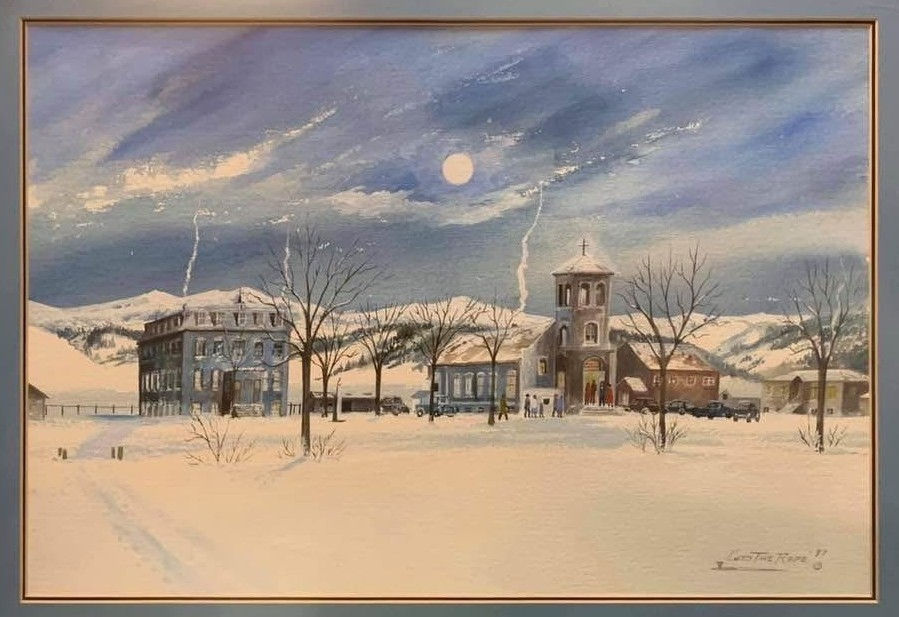

Comments